

Hydrogen Sulfide Detection H2S gas detector
2026-02-02
Hydrogen Sulfide (H₂S) Detection: Essential Safety Framework for Wastewater Treatment Operations
Hydrogen sulfide (H₂S) is a highly toxic, flammable gas that poses an invisible but lethal threat to workers in wastewater treatment, municipal engineering, and related industrial sectors. As a core hazardous substance in confined space operations, H₂S has become a key focus of gas safety management, and hydrogen sulfide detection technology—supported by professional gas detector, h2s detector, and gas sensor detector—has become an indispensable barrier to protect on-site personnel. This article deeply analyzes the properties and hazards of H₂S gas, its main generation scenarios in wastewater systems, and the core purpose of H₂S monitoring, providing a professional safety reference for the wastewater treatment industry.
1. Properties of H₂S Gas and Its Hazards to Human Health
1.1 Core Physical and Chemical Properties of H₂S
H₂S is a colorless gas with a characteristic "rotten egg" odor at low concentrations, a feature that makes it initially detectable by human smell. However, this olfactory characteristic has a critical limitation: at concentrations above 100 ppm, H₂S rapidly paralyzes the human olfactory nerve, causing workers to lose the ability to smell the gas—creating a "false sense of safety" that is one of the main causes of H₂S poisoning accidents. Chemically, H₂S is heavier than air (density ~1.19 times that of air), so it tends to accumulate in low-lying, confined, or poorly ventilated areas such as underground pools, inspection wells, and pump stations. It is also flammable and explosive, with an explosion limit of 4.3%–46% by volume in air, adding fire and explosion risks to its acute toxicity. These properties determine that H₂S is a dual-hazard gas requiring real-time monitoring via h2s gas detector and hydrogen sulfide monitor.
1.2 Graded Hazards of H₂S to Human Health
H₂S is a classic acute toxic gas, and its harm to the human body is concentration-dependent, with life-threatening effects even at ppm-level concentrations:
Low concentration (0–10 ppm): Causes mild irritation to the eyes and respiratory tract, including eye stinging, tearing, nasal congestion, and throat discomfort. Long-term exposure may lead to chronic respiratory inflammation;
Medium concentration (10–50 ppm): Triggers severe respiratory irritation, headache, dizziness, nausea, and vomiting, impairing workers’ judgment and operational capacity;
High concentration (50–100 ppm): Damages the respiratory and central nervous systems, causing pulmonary edema, confusion, and limb weakness;
Extremely high concentration (above 100 ppm): Induces "lightning-like" poisoning—workers may lose consciousness, suffer respiratory paralysis, and die within seconds to minutes without timely rescue.
This extreme toxicity means that even trace H₂S leakage cannot be ignored, making real-time monitoring via hydrogen sulfide gas detector and portable h2s detector a mandatory safety measure for related operations.
2. Key Scenarios of H₂S Generation in Wastewater Treatment Systems
H₂S is mainly produced by the anaerobic decomposition of organic matter in wastewater and sludge, and its generation is concentrated in closed, low-oxygen, and organic-rich links of the wastewater treatment system. The following are the high-risk scenarios with the most frequent H₂S accumulation:
2.1 Sewage Pumping Stations, Collecting Wells, and Grid Chambers
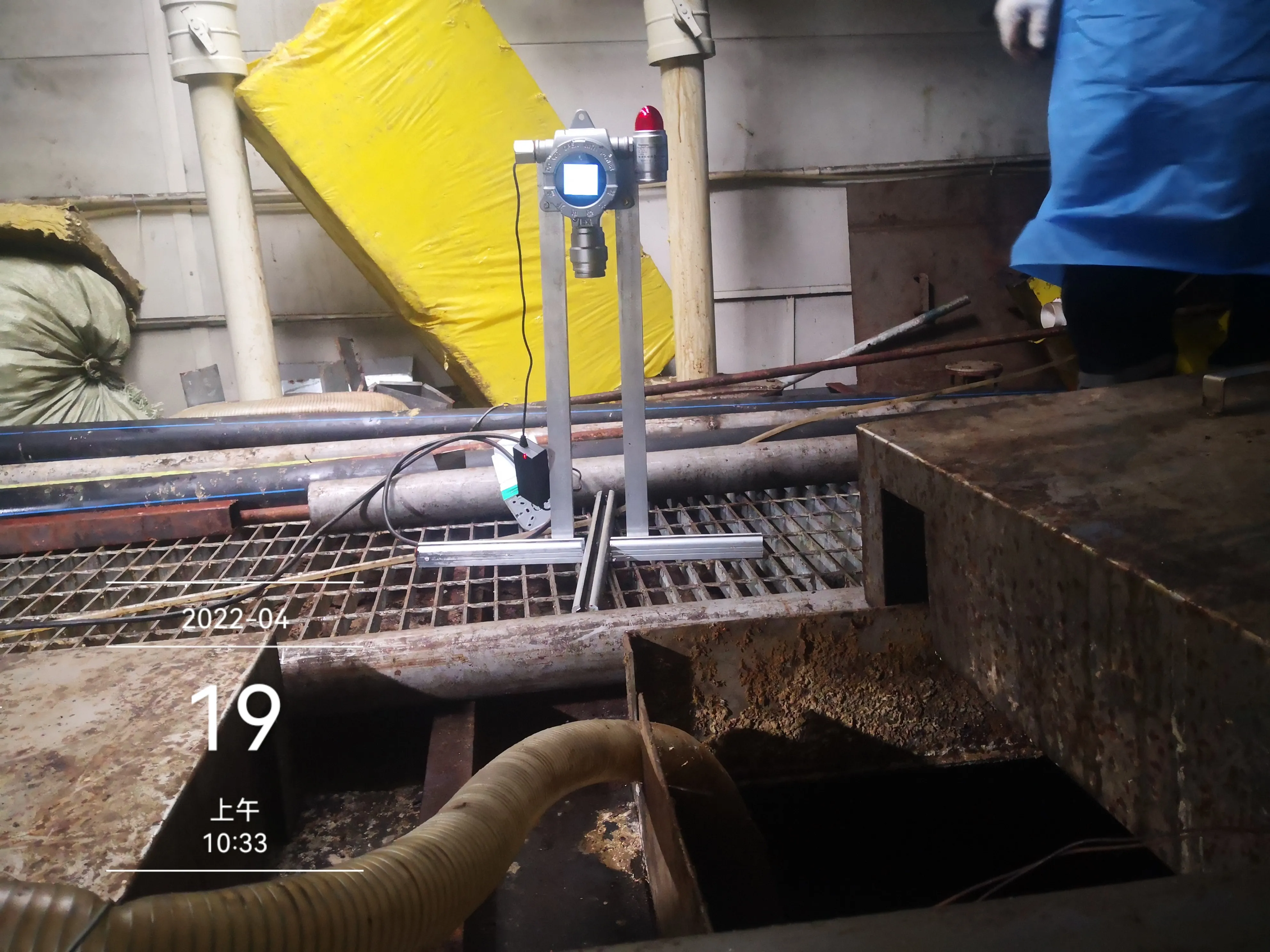
These are the front-end links of wastewater treatment, where raw sewage containing a large amount of organic matter and sulfate enters. Under anaerobic conditions (due to poor natural ventilation and closed structure), sulfate-reducing microorganisms in the sewage reduce sulfate to H₂S gas. Since these areas are mostly semi-enclosed or enclosed underground structures, H₂S cannot diffuse in time and accumulates locally, becoming a primary risk point for H₂S exposure. Gas leak detector and fixed h2s detector are usually installed here to monitor gas concentration continuously.
2.2 Sludge Treatment Workshops
Sludge is a by-product of wastewater treatment with extremely high organic matter content, and it is the core scenario of H₂S generation. In sludge thickening tanks, anaerobic digestion tanks, and dewatering machine rooms, sludge undergoes long-term anaerobic fermentation under closed or semi-closed conditions. Microbial decomposition of organic sulfides and sulfates produces a large amount of H₂S, which accumulates in the workshop due to limited ventilation. Especially during sludge discharge, dewatering, and transportation operations, accumulated H₂S is released suddenly, significantly increasing the risk of acute poisoning for operators. Portable h2s detector is essential for on-site patrol and operation monitoring in these areas.
2.3 Confined or Poorly Ventilated Underground Pools and Inspection Wells
This is the highest-incidence area of H₂S poisoning accidents in municipal and industrial wastewater treatment. Underground pools, pipe network inspection wells, and maintenance manholes are completely closed or have only small openings, with almost no air circulation. H₂S generated by sewage and sludge decomposition accumulates in large quantities at the bottom of the space, and the concentration often exceeds the lethal limit. Workers entering these spaces for maintenance, cleaning, or inspection without effective gas detection and ventilation are highly vulnerable to sudden H₂S poisoning. Hydrogen sulfide detection is a mandatory pre-operation step here, and h2s alarm must be triggered immediately once the concentration exceeds the standard.
3. Core Purpose of H₂S Gas Measurement: Safeguarding Personnel Life Safety
The primary and core purpose of measuring H₂S gas concentration in wastewater treatment and related scenarios is to protect the life safety of on-site personnel, which is the fundamental requirement of occupational health and safety regulations. As a highly toxic gas with rapid onset and lethal consequences, H₂S cannot be relied on human sensory perception for early warning, and professional gas detection equipment is the only reliable means of risk control.
3.1 Real-Time Monitoring to Prevent Acute Poisoning
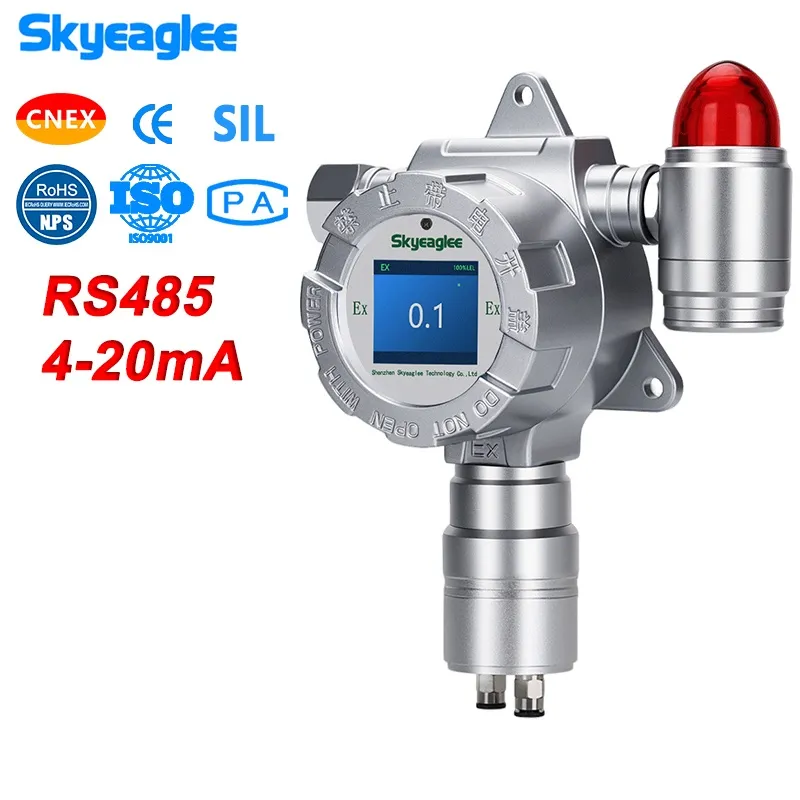
H₂S’s "olfactory paralysis" characteristic makes human smell an unreliable warning method, so real-time monitoring via h2s gas detector and hydrogen sulfide monitor is essential. Fixed gas detector is installed in high-risk areas such as pump stations and sludge workshops to continuously collect gas samples and display real-time H₂S concentration. For mobile operations, space entry, and patrol work, portable h2s detector is carried by workers to achieve all-round, dynamic monitoring of the operating environment. This real-time data capture ensures that any H₂S leakage or accumulation is detected at the initial stage, avoiding the risk of workers unknowingly entering high-concentration toxic environments.
3.2 Timely Alarm to Trigger Emergency Response
A core function of H₂S detection equipment is the h2s alarm system, which is set with graded alarm thresholds based on national safety standards and industry norms: usually 10 ppm as the first-level alarm (early warning) and 15–20 ppm as the second-level alarm (danger warning). When the monitored H₂S concentration reaches the preset threshold, the gas sensor detector immediately triggers a sound-and-light alarm—loud buzzer and flashing red light—to alert on-site personnel. This timely alarm mechanism gives workers sufficient response time to quickly evacuate the dangerous area, cut off the source of pollution, or start ventilation equipment, effectively preventing the escalation of accidents from "concentration exceeding the standard" to "poisoning casualties".
3.3 Supporting Confined Space Operation Safety Management
In confined space operations such as underground pools and inspection wells, H₂S detection is a mandatory pre-operation procedure. Before workers enter the space, operators must use portable h2s detector to conduct full-range gas detection of the space, and entry is only allowed when the H₂S concentration is lower than the safety limit. During the operation, continuous monitoring is maintained, and the h2s alarm is kept active. This whole-process hydrogen sulfide detection system forms a closed loop of "pre-entry detection - in-operation monitoring - abnormal alarm - emergency evacuation", which is the core measure to eliminate H₂S poisoning risks in confined space operations.
Conclusion
H₂S gas, with its high toxicity, accumulation tendency, and olfactory deception, is a major safety hazard in wastewater treatment systems. The properties and hazards of H₂S determine that hydrogen sulfide detection is not only a technical means but also a lifeline for on-site workers. Through the combined application of fixed gas detector, portable h2s detector, and gas sensor detector, and the implementation of real-time monitoring and graded h2s alarm mechanisms, enterprises can effectively control H₂S risks, ensure the life safety of operators, and comply with occupational safety regulations. For the wastewater treatment industry, attaching importance to H₂S gas detection, equipping professional hydrogen sulfide gas detector, and standardizing monitoring operations are the basic prerequisites for safe and stable operation.
Previous: Sulfuryl Fluoride (SO2F2) Monitoring
Related News
Contact Us





Fill out the form