

What Is a portable multi gas detector? Applications & Buying Guide
2026-04-01
What Is a portable multi gas detector? Working Principle, Types, Applications & Buying Guide
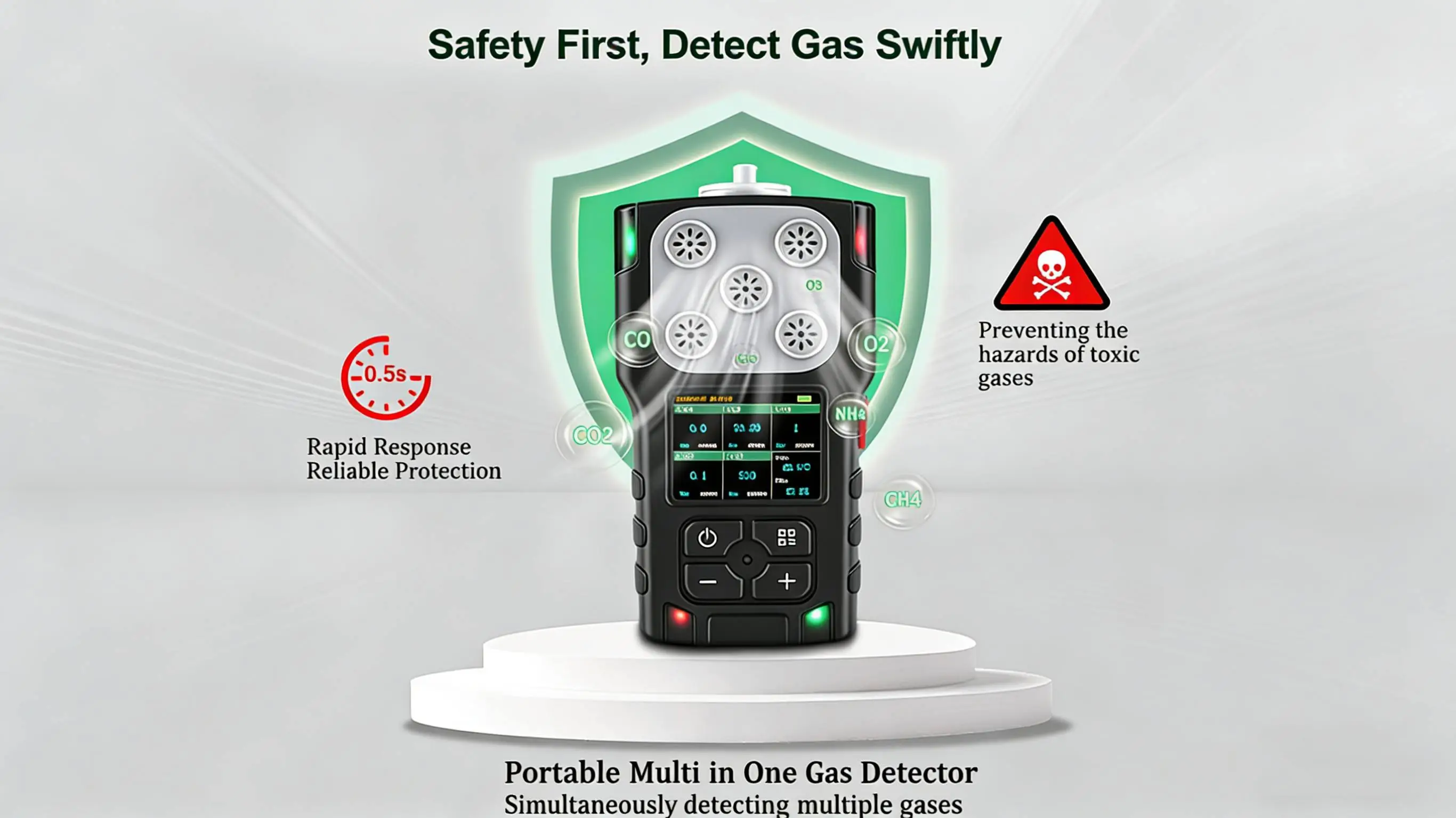
Introduction
In industrial manufacturing, construction, mining, oil and gas operations, and confined space work, invisible toxic, flammable, and explosive gases pose severe safety risks to workers and facilities. A gas detector serves as a critical life-saving and safety monitoring device, designed to quickly detect harmful gas leaks, monitor gas concentration levels, and trigger timely alarms to prevent safety accidents, casualties, and property damage.
With global industrial safety standards becoming stricter and workplace safety requirements rising, the global gas detector market is witnessing steady growth, becoming an indispensable piece of equipment across nearly all heavy industrial sectors. According to a market report by Grand View Research, which provides detailed insights into the gas detection equipment market, the global gas detection equipment market size was estimated at USD 5.60 billion in 2024 and is projected to reach USD 10.66 billion by 2030, growing at a robust CAGR of 11.7% from 2025 to 2030, with this upward momentum mainly fueled by rising worldwide employee safety concerns.
In this comprehensive guide, we will break down the core definition of Portable multi gas detector, their detailed working principles, common types, wide-ranging applications, key benefits, professional buying tips, and frequently asked questions to help you fully understand this vital safety equipment.
What Is a Portable multi Gas Detector?
A gas detector is a precision electronic instrument used to detect the presence and concentration of specific gases in the surrounding environment. It is engineered to identify flammable gases (such as methane, propane, hydrogen), toxic gases (carbon monoxide, hydrogen sulfide, sulfur dioxide), oxygen deficiency or enrichment, and other hazardous gases in real time.Conventional 4 gas detectors typically detect CH₄, H2S, CO and O2.These four gases are the most common hazardous gases in industries such as petroleum, chemical, mining and municipal engineering, making them the standard detection combination for portable multi-gas detectors.
Unlike regular monitoring tools, industrial-grade Portable multi gas detector feature high sensitivity, stable performance, and strong environmental adaptability. Once the detected gas concentration exceeds the preset safety threshold, the device will immediately send out sound, light, and vibration alarms, prompting on-site personnel to evacuate or take emergency control measures.
However, to ensure stable operation under harsh conditions such as high dust, high humidity and high temperature, relying solely on portable multi-gas detectors is insufficient.In such cases, a gas pretreatment monitoring system should be configured according to actual site conditions.
Core Components of a Gas Detector
Every high-performance gas detector consists of several key components that work together to ensure accurate and reliable detection, each playing an irreplaceable role:
Gas Sensor: The core detection component, responsible for sensing and converting gas concentration signals into electrical signals; different sensors correspond to different gas types.
Main Control Board: The central processing unit, responsible for analyzing sensor signals, calculating concentration data, and controlling alarm and display functions.
Air Pump/Diffusion Port: Used to suck or diffuse ambient gas into the sensor cavity for detection (divided into pump-suction and diffusion modes).
Display Screen: Displays real-time gas concentration, battery power, alarm status, and fault prompts for intuitive operation.
Alarm System: Integrated sound, light, and vibration triple alarm to ensure warnings are noticed even in noisy industrial environments.
Power Supply Module: Rechargeable lithium battery or external power supply, supporting long-term continuous operation for field and fixed use.
Shell & Protection Components: Explosion-proof, waterproof, and dustproof shell to adapt to harsh industrial environments (usually with IP65 or higher protection grade).
Working Principle of Portable multi gas detector
The working principle of Portable multi gas detector varies based on the built-in sensor type, with four mainstream technologies widely used in industrial scenarios, each suitable for specific gas detection needs. For authoritative technical insights into these sensor principles。with four mainstream technologies widely used in industrial scenarios, each suitable for specific gas detection needs:
Catalytic Combustion Sensor
This is the most commonly used principle for detecting flammable gases. The sensor internal resistance changes when flammable gas contacts the high-temperature catalytic bead, causing combustion. The instrument converts resistance changes into gas concentration data, suitable for detecting methane, propane, hydrogen and other flammable gases.
Electrochemical Sensor
Mainly used for detecting toxic gases and oxygen. Toxic gas molecules undergo oxidation-reduction reactions on the sensor electrode, generating current signals proportional to gas concentration, with high precision and good selectivity, ideal for carbon monoxide, hydrogen sulfide, sulfur dioxide and other toxic gases.
Infrared (NDIR) Sensor
Uses infrared light absorption characteristics of gas molecules to detect concentration, with high stability, long service life, and no oxygen interference. Widely used for detecting carbon dioxide, hydrocarbon flammable gases, suitable for long-term fixed monitoring.
PID Photoionization Sensor
Uses ultraviolet light to ionize volatile organic compounds (VOCs) and toxic volatile gases, detecting tiny gas concentrations, suitable for low-concentration toxic gas detection in chemical, pharmaceutical, and laboratory scenarios.
Main Types of Portable multi gas detector Advantages
In industrial production, municipal pipe networks, confined spaces, emergency inspections and other scenarios, environments often contain multiple toxic and harmful, flammable or oxygen-deficient hazards simultaneously. Single-gas detectors can no longer meet safety operation requirements.
Portable multi-gas detectors have become key equipment for on-site rapid inspection and real-time warning due to their multi-gas monitoring and lightweight, flexible design.
This passage compares them from three aspects: product features, differences from single-gas detectors, and advantages over fixed detectors, to clearly show their core value in practicality, flexibility and scene adaptability.
Core Features of Portable Multi-Gas Detector
Capable of simultaneously detecting O2, LEL, CO, H2S, VOC, NH3, SO2 and other gases in one unit; supports customized combinations including 4-in-1, 5-in-1, 6-in-1 and more gas configurations.
Compact and handheld for portability, enabling mobile inspection with personnel without fixed installation.
Ready for use upon power-on with fast response; supports real-time concentration display and triple alarms (sound, light and vibration).
Built-in rechargeable battery with endurance to meet on-site continuous operation requirements.
Convenient data recording, storage and export for inspection traceability.
High protection grade, adaptable to complex working conditions such as humid, dusty and confined spaces.
|
Item |
Portable Multi-Gas Detector |
Single-Gas Detector |
|
Detected Gases |
Monitors multiple gases simultaneously, fully covering composite risks |
Detects only one type of gas, with great scene limitations |
|
Number of Devices |
One device meets multi-gas detection needs |
Multiple devices required, increasing load and management costs |
|
Work Efficiency |
Simultaneous results in one test, improving inspection efficiency |
Multiple tests or devices needed, time-consuming and cumbersome |
|
Overall Cost |
Single unit purchase with centralized later maintenance |
Multiple units purchased and multiple sensors maintained, higher total cost |
|
Risk Judgment |
Comprehensive judgment of hypoxia, poisoning and explosion composite risks |
Only single risk can be identified, potential hazards easily overlooked |
Advantages Over Fixed Gas Detectors
|
Item |
Portable Multi-Gas Detector |
Fixed Gas Detector |
|
Installation & Deployment |
No wiring or drilling required, ready to use out of the box |
Fixed installation, wiring and power supply needed, complex construction |
|
Mobility |
Portable and wearable, available for cross-regional and multi-point inspection |
Fixed-point monitoring only, cannot be moved, limited coverage |
|
Emergency Application |
Ideal for sudden leakage, confined space operation and emergency rescue |
Only for long-term online monitoring, not suitable for temporary emergency scenarios |
|
Cost |
One-time purchase, no installation and construction cost |
Comprehensive cost including equipment, installation, wiring and operation & maintenance |
|
Application Scenarios |
Workshop inspection, pipeline detection, storage tank inspection, field operation, temporary operation |
Fixed points in plant area, long-term online monitoring, key area duty |
|
Flexibility |
Detection points can be adjusted as needed, strong adaptability |
Fixed position, high cost and inconvenience for later relocation |
By Detection Gas Quantity
Single Gas Detector: Detects only one type of gas, high precision, cost-effective, suitable for fixed single gas monitoring.
Multi-Gas Detector: Commonly 4-gas (detects O2, CO, H2S, Ex), 2-gas, 6-gas models, suitable for complex environments with multiple hazardous gases.
By Gas Intake Mode
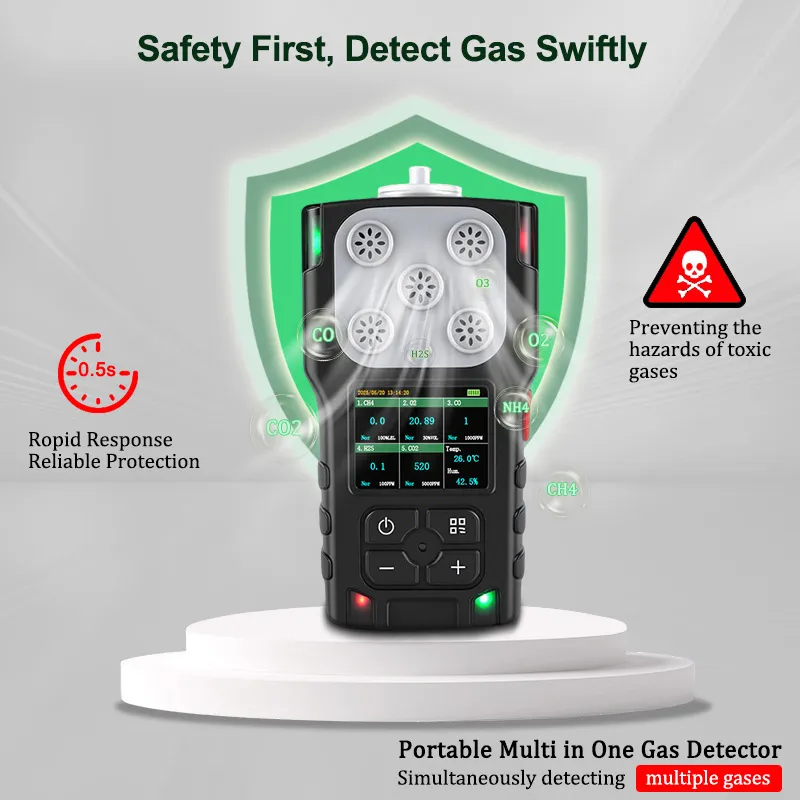
Diffusion Type: Gas naturally diffuses into the sensor, low power consumption, suitable for open and stable environments.
| Diffusion Type |
 |
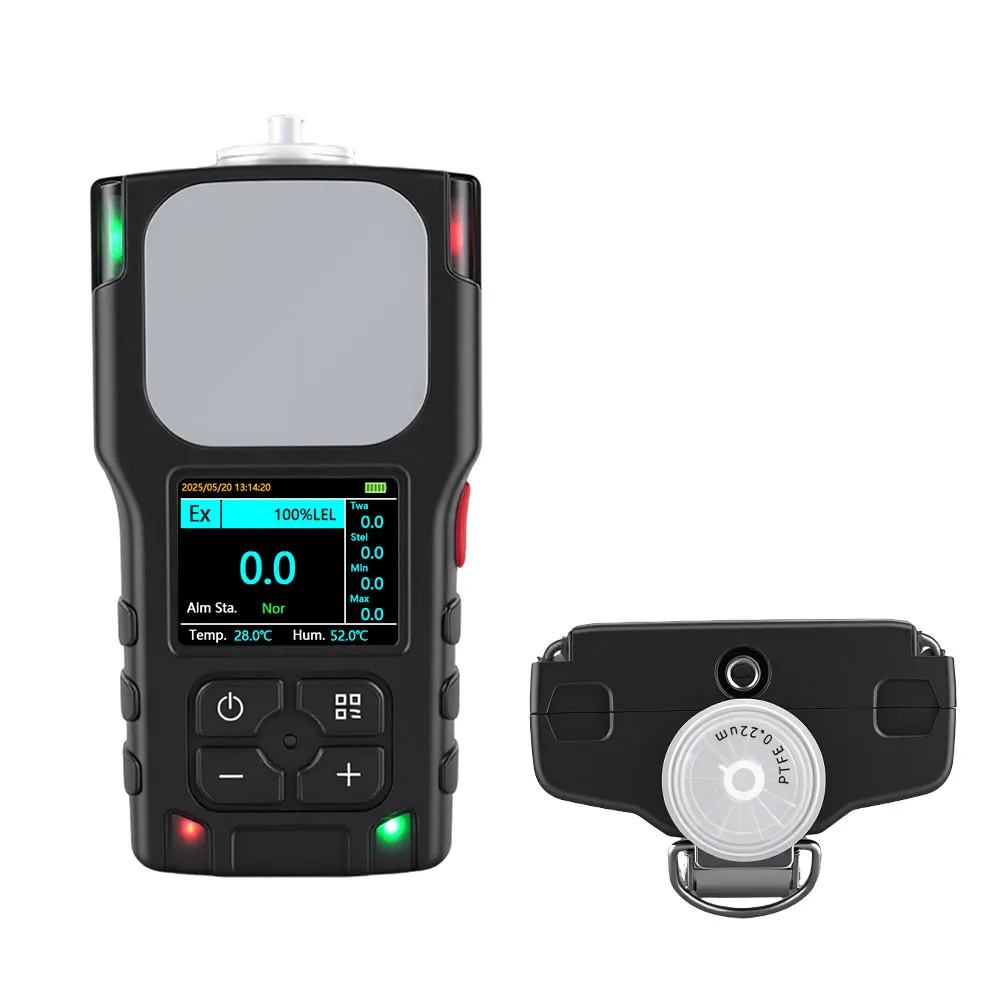
Pump-Suction Type: Built-in micro pump actively sucks gas, fast detection speed, suitable for confined spaces, pipelines, and deep space detection.
| Pump-Suction Type |
 |
|
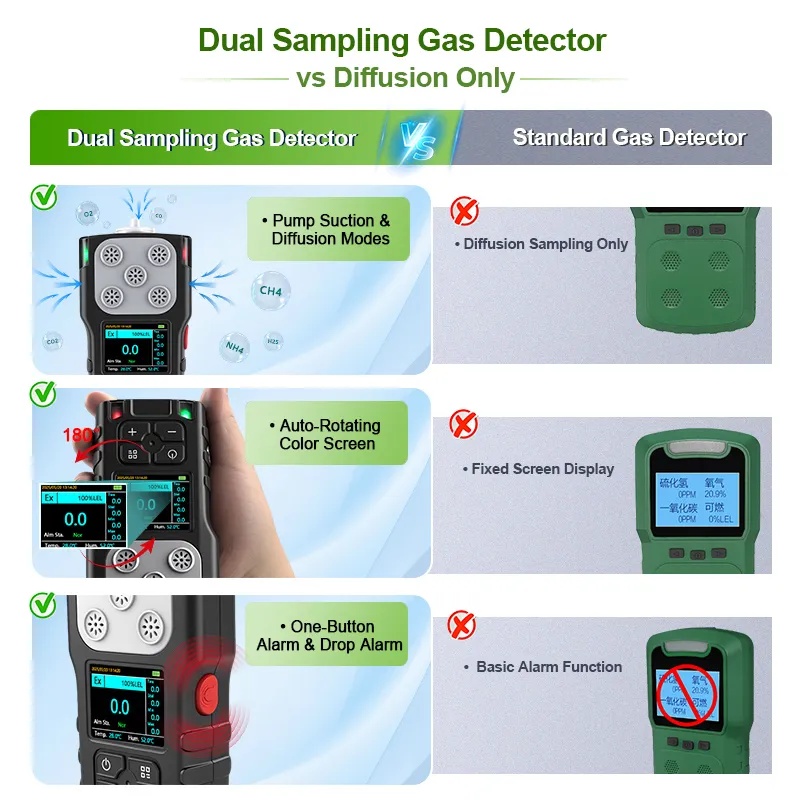
The portable multi gas detector advantages of skyeaglee |
other brand |
|
Pump suction & diffusion modes |
Diffusion sampling only |
|
The screen can rotate 180 degrees. |
Fixed screen display |
|
One-button alarm & drop alarm |
Basic alarm function |
|
With humidity and temperature detection |
Can only detect gases |
|
|
|
Key Applications & Uses of Portable multi gas detector
Portable multi gas detector are widely used in various industries that require gas safety monitoring, covering almost all fields involving hazardous gases:
Oil & Gas Industry: Monitor flammable gas leaks in drilling platforms, oil depots, and gas stations to prevent explosions.
Mining Industry: Detect gas, carbon monoxide, and hydrogen sulfide to ensure mine operation safety and prevent gas explosions.
Chemical & Pharmaceutical Plants: Monitor toxic and flammable gas leaks in production workshops and storage areas.
Construction & Confined Space: Pre-operation gas detection for pipelines, tunnels, and underground spaces.
Wastewater Treatment & Waste Disposal: Detect hydrogen sulfide and other toxic gases generated by waste decomposition.
Laboratories & Scientific Research: Monitor volatile toxic gases and ensure experimental environment safety.
Food Cold Chain & Refrigeration: Detect refrigerant leaks and carbon dioxide concentration.
Advantages & Limitations of Portable multi gas detector
Core Advantages
Real-time monitoring: Quickly capture gas leaks and issue early warnings to avoid safety accidents.
High precision: Professional industrial sensors ensure accurate detection and reduce false alarms.
Strong environmental adaptability: Explosion-proof, waterproof, and dustproof design for harsh working conditions.
Compliance with safety standards: Meet international certifications such as ATEX, CE, and Ex, complying with global industrial safety regulations.
Easy operation & maintenance: Simple calibration process, intuitive data display, suitable for on-site workers.
Limitations & Usage Notes
Sensors have a service life and require regular calibration and replacement.
Each sensor only corresponds to specific gases and cannot detect all hazardous gases.
Extreme temperatures, high dust, and corrosive environments may affect detection accuracy.
Regular charging and maintenance are required to ensure normal operation of portable models.
How to Choose the Right Gas Detector: Professional Buying Guide
Selecting a suitable gas detector is critical for workplace safety. Consider the following key factors before purchasing:
Confirm Target Gas Type: Clarify the gases to detect and select the matching sensor type.
Determine Detection Concentration Range: Match the detection range with on-site gas concentration risks.
Choose Portable or Fixed: Portable for mobile patrols, fixed for 24-hour fixed-point monitoring.
Check Protection & Explosion-Proof Grade: Prioritize IP65+ and international explosion-proof certifications for industrial use.
Verify Relevant Certifications: Ensure products have ATEX, CE, FCC and other industrial safety certifications.
Consider Service Life & Maintenance Cost: Evaluate sensor replacement cycle and after-sales support.
Battery Life & Operation Convenience: For portable models, ensure long battery life and simple operation.
Frequently Asked Questions (FAQ)
Q1:How often should a gas detector be calibrated?
A1:Industrial Portable multi gas detector are recommended to be calibrated every 3-6 months; for high-frequency use or harsh environments, calibration every 1-3 months is required to ensure detection accuracy.
What is the service life of a gas sensor?
Generally, electrochemical sensors last 2-3 years, catalytic combustion sensors last 3-5 years, and infrared sensors have a longer service life of 5-8 years, depending on usage environment and maintenance.
Can a gas detector detect all types of gases?
No. Each gas detector is equipped with a special sensor, which can only detect specific corresponding gases. Multi-Portable multi gas detector can only detect the types corresponding to their built-in sensors.
What is the difference between pump-suction and diffusion Portable multi gas detector?
Diffusion models rely on natural gas diffusion, with lower power consumption and lower cost; pump-suction models actively suck gas, with faster detection speed, more suitable for confined spaces and deep space detection.
Do Portable multi gas detectorrequire professional operation?
Industrial Portable multi gas detector are designed for easy operation, but users need to receive basic training to understand alarm signals, maintenance methods, and emergency handling procedures.
Conclusion
A gas detector is a core piece of safety equipment for industrial production and field operation, guarding worker life safety and facility property security. Whether you need portable single-gas detection for daily patrols or fixed multi-gas monitoring for long-term workshop use, choosing a high-quality, certified gas detector is the top priority of industrial safety management.
When selecting equipment, combine actual usage scenarios, target gas types, and safety certification requirements to pick the most suitable model, and carry out regular calibration and maintenance to ensure the instrument remains in normal working condition at all times.
For customized gas detection solutions, bulk procurement inquiries, and professional after-sales maintenance support, feel free to contact our professional team to get tailored industrial safety solutions.
[Click here to contact our selection consultants] . We offer a free, no-obligation consultation to help you assess your requirements and filter through the technical noise to find the perfect fit for your facility.
Related News
Contact Us





Fill out the form