

Critical Safety Solutions for Chemical and Petrochemical Industries
2026-02-04
Chlorine (CL2) Gas Detection: Critical Safety Solutions for Chemical and Petrochemical Industries
Chlorine (CL2) stands as one of the most essential yet hazardous industrial gases, serving as a core raw material in chemical manufacturing while posing severe threats to human life, equipment integrity, and operational safety. Given its extreme toxicity, corrosiveness, and oxidizing properties, real-time monitoring via professional Chlorine Gas Detector and cl2 gas detector has become an indispensable safety measure in chemical plants, petrochemical facilities, and related process environments. This article systematically explores the necessity of CL2 detection, high-risk process environments generating chlorine, the rationale for deploying specialized detectors, and the core safety objectives of CL2 monitoring, providing in-depth insights for industrial safety management in chlorine-related sectors.
1. The Imperative of Chlorine (CL2) Gas Detection: Addressing Inherent Industrial Risks
Chlorine is a colorless, pungent gas with strong oxidizing properties, and its unique chemical characteristics make unmonitored CL2 exposure a catastrophic risk—thus, reliable Chlorine Detector and détecteur de gaz systems are non-negotiable for industrial operations involving chlorine. The core reasons for mandatory CL2 detection lie in its acute toxicity, corrosive nature, and reactivity, which demand proactive, real-time monitoring rather than reliance on human sensory perception:
First, CL2 is a highly toxic gas that attacks the respiratory system, eyes, and mucous membranes. Even low concentrations (as low as 1–3 ppm) cause immediate irritation, including coughing, chest tightness, and eye stinging; moderate concentrations (30–60 ppm) lead to severe pulmonary edema, respiratory failure, and death within minutes. Critically, prolonged exposure to low CL2 levels desensitizes the olfactory nerve, causing workers to lose the ability to detect its pungent odor—creating a "false sense of safety" that is a leading cause of CL2 poisoning accidents. Only a precision cl2 gas detector can identify trace leaks before they reach harmful concentrations, compensating for the limitations of human perception.
Second, CL2 is a powerful oxidizer that does not burn but intensifies combustion and reacts violently with organic materials, reducing agents, and flammable gases (e.g., hydrogen, methane). In chemical and petrochemical plants, where flammable substances are ubiquitous, a CL2 leak can trigger explosive reactions or fires, even if CL2 itself is non-combustible. This reactivity necessitates continuous monitoring with a Chlorine Gas Detector to prevent cross-hazard accidents.
Third, CL2 is highly corrosive to metals, rubber, and plastics, damaging pipelines, valves, and storage equipment over time and increasing leak risks. Corrosion-induced leaks are often gradual and undetectable by visual inspection, making real-time gas monitoring the only reliable way to identify early-stage equipment failure.
2. High-Risk Process Environments Generating Chlorine (CL2)
Chlorine is primarily generated or used as a critical raw material/byproduct in chemical and petrochemical industries, with concentrated high-risk zones requiring targeted deployment of Chlorine Detector and sampling tube-integrated monitoring systems. Key process environments include:
2.1 Chemical and Petrochemical Production Facilities
As a foundational industrial gas, chlorine is indispensable for manufacturing polyvinyl chloride (PVC), chlorinated solvents, pesticides, pharmaceutical intermediates, bleaching agents, and water treatment chemicals. In these facilities, CL2 is either produced on-site (via electrolysis of brine) or transported as a liquefied gas, with leaks occurring at every stage of production, storage, and transportation.
2.2 Key Monitoring Points for CL2 Detection
To ensure comprehensive risk coverage, cl2 gas detector systems must be installed at high-risk nodes where leaks are most likely to occur:
- Chlorine transmission pipelines: Long-distance pipelines for CL2 transport face risks of corrosion, joint failure, or external damage; sampling tubes extend monitoring to pipeline bends, flanges, and connection points.
- Reaction kettles and production reactors: CL2 is consumed or generated in chemical synthesis reactions, with leaks possible at reactor seals, feed lines, or pressure relief valves.
- Storage tank areas: Liquefied CL2 storage tanks are high-risk zones, with leaks at tank valves, breathing ports, or pipeline connections; sampling tubes are ideal for monitoring gas accumulation above tanks and in surrounding trenches.
- Process valve groups, pumps, and flanges: These are frequent leak points due to mechanical wear, corrosion, or improper maintenance—sampling tube design allows probes to reach these hard-to-access, high-risk locations while mounting the detector body in safe, accessible areas.
The sampling tube configuration of professional Chlorine Gas Detector systems is particularly suited to these environments, as it separates the sensitive detector core from harsh process zones, extending equipment lifespan while ensuring accurate monitoring of leak-prone areas.
3. The Rationale for Specialized Detectors in CL2 Process Environments
Standard gas detectors cannot meet the safety demands of CL2-related industrial environments, which require specialized Chlorine Detector, cl2 gas detector, and détecteur de gaz solutions tailored to explosive risks, continuous monitoring needs, and industrial installation standards. The core justifications for specialized detectors are as follows:
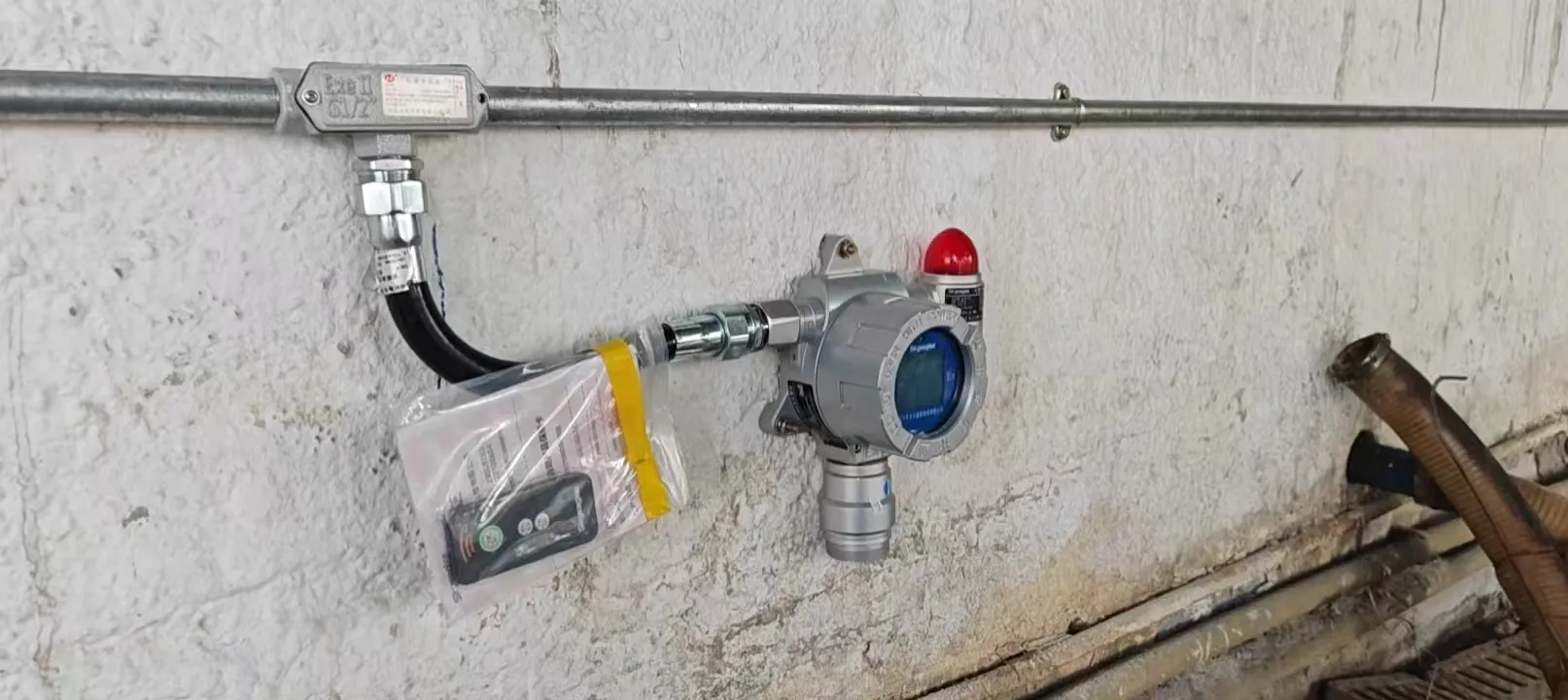
3.1 Compliance with Explosion-Proof Certification (Exe II CT6)
While chlorine itself is non-flammable, its strong oxidizing properties enable it to support combustion and react violently with flammable gases, vapors, or dust—common in chemical and petrochemical plants. The Exe II CT6 explosion-proof certification ensures the detector is safe for use in hazardous areas where explosive atmospheres may exist, preventing electrical sparks or heat from the detector from triggering reactions between CL2 and flammable substances. This certification is not just a regulatory requirement but a critical safety safeguard against cross-hazard accidents, making it a non-negotiable feature for industrial CL2 detection.
3.2 Fixed Installation with Sampling Tube Design for 24/7 Continuous Monitoring
CL2 process environments demand uninterrupted, real-time monitoring, as leaks can occur at any time during production, storage, or maintenance. Fixed Chlorine Gas Detector systems with sampling tube technology are designed for 24/7 operation, addressing two key challenges:
- Probe placement at high-risk zones: Sampling probes extend to leak-prone points (valves, tank breathing ports, trenches) where CL2 accumulates most rapidly, ensuring early leak detection.
- Detector body installation in safe areas: The detector core is mounted in accessible, low-risk locations (away from corrosive fumes or explosive atmospheres), simplifying maintenance, calibration, and replacement while protecting sensitive components from harsh conditions.
This design balances monitoring accuracy and equipment durability, a necessity for industrial CL2 environments where downtime for detector maintenance is costly and risky.
3.3 Industrial-Grade Installation for Permanent Infrastructure Integration
Specialized CL2 detectors are engineered for fixed, industrial-grade installation on cement walls, process pipelines, and steel structures—unlike temporary portable detectors, they are integrated into the plants core safety infrastructure. This permanent installation ensures:
- Stable, long-term operation in harsh industrial conditions (temperature fluctuations, humidity, corrosion);
- Seamless integration with the plants safety control system, enabling real-time data transmission and alarm linkage;
- Compliance with industrial safety standards for fixed hazardous gas monitoring, rather than ad-hoc, temporary solutions.
Industrial installation confirms the detectors role as a foundational safety asset, not a supplementary tool, in CL2 process environments.
4. Core Safety Objectives of CL2 Gas Detection
The deployment of Chlorine Gas Detector, cl2 gas detector, and détecteur de gaz systems serves two overarching safety goals: protecting human life and preventing catastrophic production accidents—both of which are critical to the sustainable operation of chemical and petrochemical facilities.
4.1 Protecting Personnel Life Safety (Primary Objective)
The most fundamental purpose of CL2 detection is to safeguard the lives of on-site workers, maintenance personnel, and emergency responders. Professional Chlorine Detector systems are calibrated to trigger alarms at concentrations far below the human olfactory threshold and toxic exposure limits, providing critical early warning:
- Alerts activate instantly upon detecting trace CL2 leaks, allowing personnel to evacuate the danger zone before exposure to harmful concentrations;
- Audible, visual, and remote alarms ensure warnings are received even in noisy industrial environments, eliminating delays in emergency response;
- Real-time concentration data guides emergency personnel in assessing risk levels and implementing targeted rescue or ventilation measures.
By detecting leaks at the earliest stage, CL2 detectors turn an invisible, odorless (post-desensitization) hazard into a manageable risk, directly reducing the likelihood of poisoning and fatalities.
4.2 Preventing Catastrophic Production Accidents
Early CL2 leak detection via cl2 gas detector systems enables proactive intervention to prevent small leaks from escalating into major accidents:
- Interlock system activation: Detector signals trigger automated safety measures, such as closing emergency shut-off valves on CL2 pipelines, starting exhaust ventilation systems, or isolating reaction kettles—stopping leaks at the source and preventing spread.
- Minimizing operational downtime: Early warning allows maintenance teams to address leaks during scheduled shutdowns or minor repairs, avoiding unplanned production halts caused by large-scale leaks or accidents.
- Protecting equipment and infrastructure: CL2 corrosivity damages expensive process equipment (reactors, pipelines, storage tanks); early detection reduces exposure time, limiting corrosion-related equipment failure and replacement costs.
- Avoiding environmental and legal liabilities: Uncontrolled CL2 releases contaminate air, water, and soil, violating environmental regulations and incurring heavy fines. Continuous monitoring ensures leaks are contained before causing widespread environmental harm.
Conclusion
Chlorine (CL2) is a double-edged sword in the chemical and petrochemical industries—vital to manufacturing processes yet extremely hazardous to life and operations. The inherent risks of CL2 toxicity, oxidization, and corrosion, combined with the limitations of human sensory detection, make specialized Chlorine Gas Detector, cl2 gas detector, Chlorine Detector, and détecteur de gaz systems indispensable safety tools.
From explosion-proof certification and sampling tube design to industrial-grade installation, these detectors are engineered to meet the unique demands of CL2 process environments, enabling 24/7 continuous monitoring of high-risk nodes. By delivering early leak warnings, protecting personnel from acute poisoning, and triggering interlock systems to prevent accident escalation, CL2 detection systems form the first line of defense for chemical and petrochemical facilities.
For enterprises operating with chlorine, investing in professional CL2 detection technology is not just a regulatory requirement but a commitment to protecting human life, ensuring production stability, and fulfilling environmental and social responsibilities. As industrial safety standards evolve, the role of advanced CL2 gas detection systems will only grow more critical in building resilient, safe, and sustainable chemical operations.
Related News
Contact Us





Fill out the form