

Why Sudden Fainting in Underground Construction
2026-02-25
In underground construction scenarios such as coal mines, deep wells, and tunnel projects, sudden fainting among workers is often mistakenly attributed to fatigue—but the real culprit is often excessive carbon dioxide (CO2) concentration. This invisible and odorless hazard lurks in every poorly ventilated underground workspace, threatening the lives of workers and disrupting construction progress. For enterprises engaged in underground construction, solving CO2 overdose risks is not only a legal obligation to protect worker safety but also a key measure to avoid project delays, liability disputes, and economic losses. This article deeply analyzes the causes and hazards of CO2 overdose in underground construction, highlights the necessity of professional gas detection equipment, and introduces targeted solutions that integrate core keywords, helping enterprises establish a comprehensive safety protection system while promoting the value of gas detection products.
1. The Hidden Danger Behind Underground Fainting: CO2 Overdose, Not Fatigue
Underground construction sites such as coal mines and deep tunnels have unique environmental characteristics that make CO2 accumulation a common and fatal hazard. Unlike carbon monoxide gas, which is often associated with combustion and has a pungent odor at high concentrations, carbon dioxide (CO2) is colorless, odorless, and tasteless—making it impossible for workers to detect its overdose through sensory perception alone. This invisibility is the primary reason for sudden fainting accidents in underground construction.
1.1 How CO2 Accumulates in Underground Construction
In coal mines and deep well operations, CO2 is naturally emitted from rock formations—this continuous seepage, combined with poor ventilation in underground spaces, leads to gradual accumulation of CO2. Tunnels, in particular, have narrow spaces and limited air circulation; during construction, the exhaust of construction machinery and the breathing of workers further consume oxygen, while CO2 continues to accumulate and "occupy" the space originally filled with oxygen. Over time, the oxygen concentration drops sharply, and the CO2 concentration exceeds the safe limit, creating a hypoxic environment that directly endangers human health.
1.2 The Hazards of CO2 Overdose to Workers
CO2 overdose does not cause fatal harm immediately; its hazards are gradual and progressive, which is why it is easily ignored:
- Low-concentration : Causes dizziness, fatigue, and nausea—symptoms often mistaken for work fatigue, leading workers to continue operations and face greater risks;
- Medium-concentration : Triggers severe headaches, shortness of breath, and blurred consciousness, affecting judgment and mobility;
- High-concentration : Leads to rapid loss of consciousness, respiratory depression, and even suffocation—without timely rescue, it can be fatal within minutes.
This gradual progression of hazards means that relying on human perception to judge CO2 concentration is extremely unreliable, and professional carbon dioxide gas detector and co2 analyzer are the only reliable means of early warning.
2. Essential Protection for Underground Construction: CO2 Detection Equipment
For enterprises engaged in coal mining, deep well, and tunnel construction, equipping professional CO2 detection equipment is not an optional investment but a mandatory safety measure—and a wise business decision to avoid economic losses. Whether it is fixed monitoring for long-term construction sites or portable detection for mobile operations, selecting the right equipment can effectively prevent CO2 overdose accidents, protect workers’ lives, and ensure the smooth progress of projects.
2.1 Fixed Carbon Dioxide Gas Detector: 24/7 Continuous Protection for Key Areas
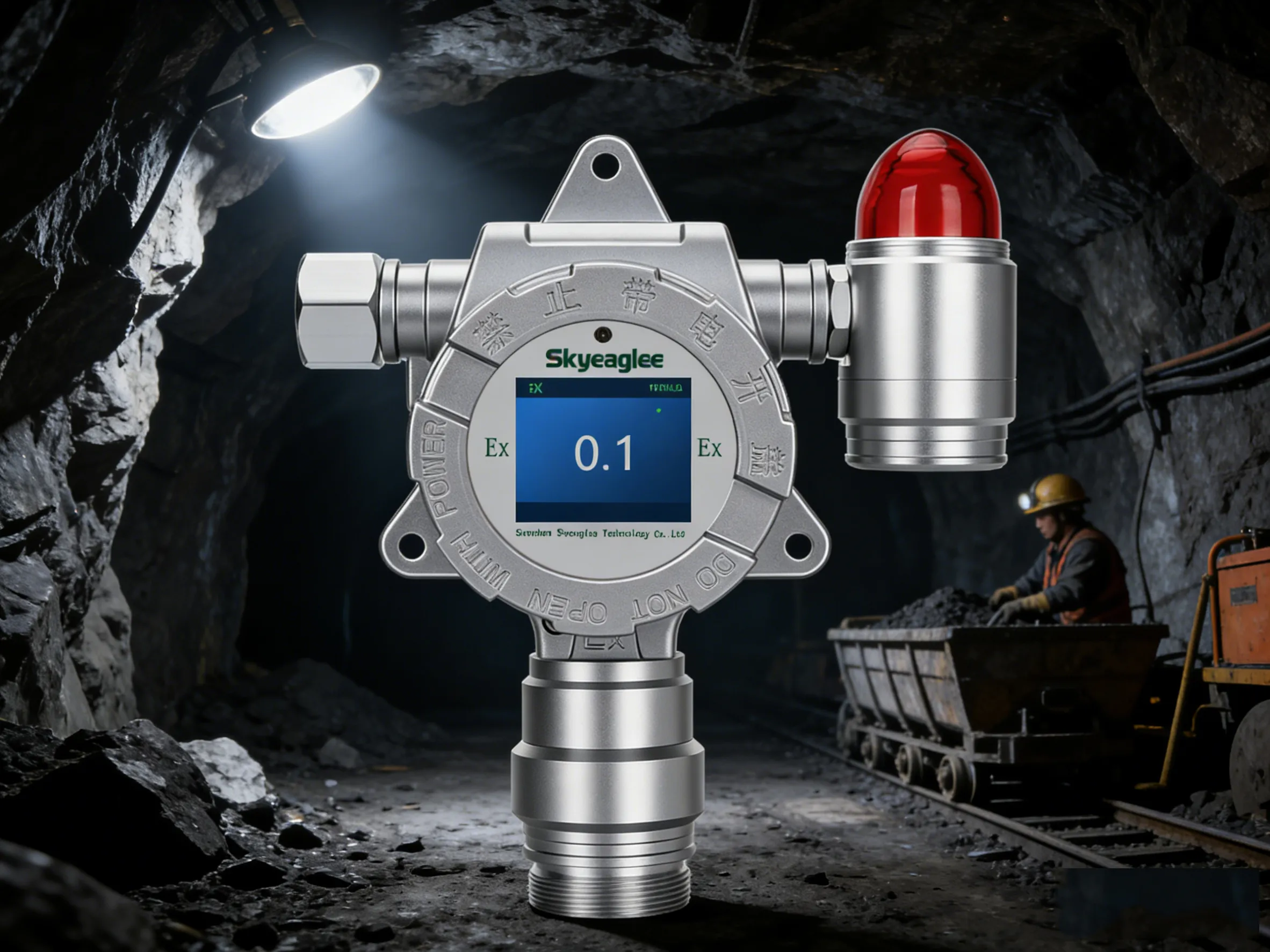
Underground construction sites such as coal mines and tunnels require 24-hour uninterrupted monitoring of CO2 concentration, and fixed carbon dioxide gas detector is the core equipment to achieve this goal. Installed in key areas with high CO2 seepage risks (such as rock formation interfaces, tunnel depths, and ventilation dead zones), these detectors can real-time monitor CO2 concentration and connect to the on-site alarm system. When the concentration exceeds the preset safe threshold, they immediately trigger an audible and visual alarm—similar to a carbon monoxide alarm—prompting workers to evacuate and take ventilation measures in a timely manner. Our fixed CO2 detectors are equipped with high-precision gas analyzer co2 modules, ensuring accurate data collection, and supporting linkage with ventilation equipment to automatically adjust air circulation, further reducing accident risks. For enterprises, fixed detection equipment is a long-term investment that effectively avoids the huge economic losses caused by accidents such as worker suffocation, project suspension, and liability claims.
2.2 Portable CO2 Detection Equipment: Flexible Protection for Handheld Operations
For mobile workers such as underground patrol personnel, maintenance teams, and construction teams, portable detection equipment is indispensable. Our portable gas detector, handheld co2 detector, and portable multi gas detector are designed for underground construction scenarios—compact, lightweight, and easy to carry, enabling workers to monitor CO2 concentration in real time during mobile operations. The portable co2 detector is equipped with a high-sensitivity sensor, with clear data display and adjustable alarm thresholds; the handheld gas detector supports rapid sampling and real-time data feedback, ensuring that workers can detect potential hazards at any time. In addition, our portable gas analyzer andco2 gas leak detector can also be used for on-site verification and leak detection, providing comprehensive protection for mobile operations. For enterprises, equipping workers with portable detection equipment not only meets safety regulations but also enhances employee trust and work efficiency, reducing the risk of safety accidents caused by mobile operations.
2.3 Comprehensive Protection: Integrating CO2 and Other Hazardous Gas Detection
Underground construction sites are not only threatened by CO2 overdose but also may face risks from other hazardous gases such as carbon monoxide gas (generated by incomplete combustion of construction machinery). Our portable multi gas detector and carbon monoxide and gas leak detector can simultaneously monitor CO2, carbon monoxide, and other gases, providing all-round protection for underground workers. Equipped with high-quality carbon monoxide sensor and CO2 detection modules, these detectors can accurately identify multiple gas hazards and trigger targeted alarms—similar to a carbon monoxide detector alarm—ensuring that workers are warned of any hazardous gas overdose in a timely manner. This comprehensive detection solution not only simplifies equipment management for enterprises but also reduces investment costs, achieving "one device, multiple protections."
3. Commercial Value of CO2 Detection Equipment: Safety Is the Foundation of Sustainable Operation
For enterprises engaged in underground construction, investing in CO2 detection equipment is not just a safety expenditure but a strategic investment that brings long-term commercial value. The commercial significance of these equipment is reflected in three key aspects:
3.1 Avoiding Economic Losses Caused by Safety Accidents
A single CO2 overdose accident can lead to worker injuries, deaths, project suspension, and huge liability compensation—losses that far exceed the investment in detection equipment. By equipping professional carbon dioxide gas detector, co2 analyzer, and portable gas leak detector, enterprises can detect potential hazards in advance, avoid accidents, and reduce economic losses caused by project delays, fines, and compensation.
3.2 Complying with Regulatory Requirements and Enhancing Enterprise Reputation
Countries around the world have strict safety regulations for underground construction, requiring enterprises to equip professional gas detection equipment to protect worker safety. Equipping our detection products ensures that enterprises comply with regulatory requirements, avoid fines and legal risks, and enhance their reputation in the industry. A safe and standardized operation model not only attracts more cooperation opportunities but also helps enterprises retain employees, reducing recruitment and training costs.
3.3 Improving Operational Efficiency and Reducing Management Costs
Our detection equipment is designed with intelligence and user-friendliness in mind: fixed detectors support remote monitoring and data statistics, reducing the workload of on-site management personnel; portable equipment such as co detector portable and portable co2 detector for travel is easy to operate and maintain, reducing training costs for workers. In addition, real-time monitoring data can help enterprises optimize ventilation systems and construction plans, improving operational efficiency and reducing energy consumption.
4. Conclusion: Choose Professional CO2 Detection Equipment, Safeguard Enterprise Development
Sudden fainting in underground construction is not a trivial matter of fatigue but a fatal warning from CO2 overdose. For coal mining, deep well, and tunnel construction enterprises, the invisibility and harm of CO2 mean that professional detection equipment is the only reliable safety barrier. Our comprehensive detection solutions—including fixed carbon dioxide gas detector, co2 analyzer, portable gas detector, handheld co2 detector, and portable multi gas detector—are tailored to underground construction scenarios, providing 24/7, all-round protection for workers and enterprises.
Investing in professional gas detection equipment is investing in safety, compliance, and sustainable development. We are committed to providing high-quality, high-reliability detection products, helping underground construction enterprises avoid safety risks, reduce economic losses, and enhance core competitiveness. Choose our CO2 detection solutions, protect your workers’ lives, and lay a solid foundation for the long-term development of your enterprise.
Related News
Contact Us





Fill out the form