

VOC detection and treatment cases
Release time:2025-11-11
Source:Skyeaglee case
Professional environmental testing agencies use portable VOC gas detectors to test indoor air quality.
Detection process
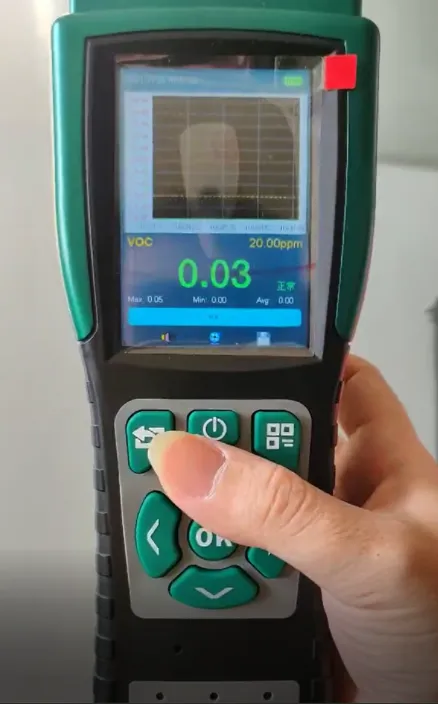
The inspectors used the portable VOC gas detector as shown in the figure to conduct tests at five locations in the office, including the open office area, the independent meeting room, and the general manager's office. During the detection, the instrument showed that the VOC concentration was between 0.8 and 2.3ppm (the national standard limit for indoor VOC concentration is ≤0.6mg/m³, approximately 0.2ppm, with slight differences among different standards). Among them, the VOC concentration in the general manager's office reached 2.3ppm due to the extensive use of custom-made wooden furniture. Far beyond the normal range, the instrument status shows "excessive".
Cause analysis
After investigation, it was found that the main sources of pollution are newly purchased composite wood furniture, carpets and wall coatings. These materials release a large amount of volatile organic compounds (VOCs) after decoration, including formaldehyde, benzene series substances, etc.
Effect acceptance
After the treatment was completed, the portable VOC gas detector was used again for detection. The VOC concentration at each point dropped below 0.3ppm, and the instrument displayed "Normal". The office odor was basically eliminated, and employees could move in and work with peace of mind.
This case demonstrates the advantages of portable VOC gas detectors in indoor air quality testing, such as their rapidity and accuracy. They can promptly identify VOC over-limit issues, providing data support for subsequent governance and ensuring the health and safety of the environment where people are located.
Professional environmental testing agencies use portable VOC gas detectors to test indoor air quality.
Detection process
The inspectors used the portable VOC gas detector as shown in the figure to conduct tests at five locations in the office, including the open office area, the independent meeting room, and the general manager's office. During the detection, the instrument showed that the VOC concentration was between 0.8 and 2.3ppm (the national standard limit for indoor VOC concentration is ≤0.6mg/m³, approximately 0.2ppm, with slight differences among different standards). Among them, the VOC concentration in the general manager's office reached 2.3ppm due to the extensive use of custom-made wooden furniture. Far beyond the normal range, the instrument status shows "excessive".
Cause analysis
After investigation, it was found that the main sources of pollution are newly purchased composite wood furniture, carpets and wall coatings. These materials release a large amount of volatile organic compounds (VOCs) after decoration, including formaldehyde, benzene series substances, etc.
Effect acceptance
After the treatment was completed, the portable VOC gas detector was used again for detection. The VOC concentration at each point dropped below 0.3ppm, and the instrument displayed "Normal". The office odor was basically eliminated, and employees could move in and work with peace of mind.
This case demonstrates the advantages of portable VOC gas detectors in indoor air quality testing, such as their rapidity and accuracy. They can promptly identify VOC over-limit issues, providing data support for subsequent governance and ensuring the health and safety of the environment where people are located.
Contact Us





Fill out the form