

Case Studies on Formaldehyde pollution Detection and control in laboratories
Release time:2025-11-12
Source:Skyeaglee case
Case Background
The chemistry laboratory in the university has been renovated, with a new batch of laboratory benches, fume hoods and storage cabinets added (some of which are made of composite board materials). The laboratory personnel reported that they could always smell a slight pungent odor during the intervals of the experiment, and two researchers showed symptoms of skin allergy. The laboratory management personnel suspected that there was a problem of excessive formaldehyde, so they used a portable HCHO gas detector to conduct a special test.
Detection process
Testing preparation
The detection time is selected one hour after the experiment ends. At this time, the laboratory is in a relatively closed state (the fume hood is closed and the doors and Windows are half-open).
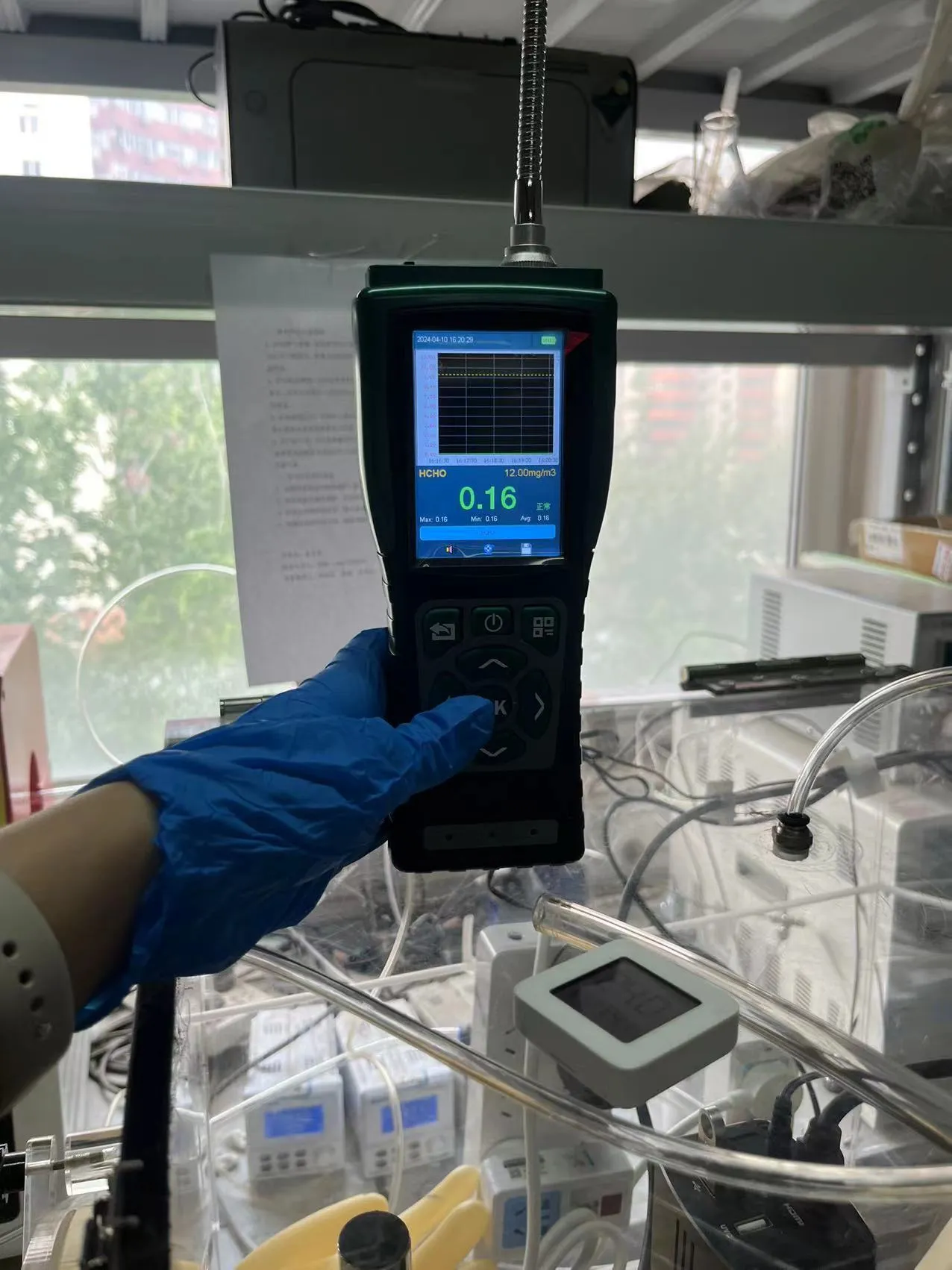
A portable HCHO gas detector of the same model as the one shown in the picture was used to test the three functional areas of the experimental operation area, the drug storage area and the office rest area respectively.
Data collection
Experimental operation area: Due to its proximity to the newly installed composite board experimental bench, the formaldehyde concentration detection value was 0.21mg/m³ (far exceeding the indoor air quality standard requirement of ≤0.10mg/m³).
The formaldehyde concentration around the storage cabinet in the medicine storage area is 0.15mg/m³, which is in an excessive state.
Office and rest area: It is relatively far from the pollution source, with a concentration of 0.09mg/m³, close to the standard limit.
Rectification and prevention measures
Source control: Replace the composite board storage cabinet suspected of releasing formaldehyde with stainless steel material, and spray formaldehyde barrier agent on the surface of the laboratory bench.
Ventilation enhancement: Adjust the operation strategy of the ventilation system. Keep the fume hood running for 30 minutes after the experiment and keep the laboratory doors and Windows slightly open for ventilation on a daily basis.
Regularized monitoring: Establish a regular formaldehyde testing system in the laboratory. Use portable detectors for random checks once a week to ensure that the concentration remains consistently below 0.10mg/m³.
Case value
Due to the frequent updates of experimental equipment and furniture, university laboratories are prone to pollution from volatile organic compounds such as formaldehyde. The portable HCHO gas detector can quickly locate contaminated areas, helping laboratory managers take targeted measures in a timely manner to ensure the health of laboratory personnel and the safety of the laboratory environment. It also provides data support for the selection and acceptance of laboratory decoration materials.
Case Background
The chemistry laboratory in the university has been renovated, with a new batch of laboratory benches, fume hoods and storage cabinets added (some of which are made of composite board materials). The laboratory personnel reported that they could always smell a slight pungent odor during the intervals of the experiment, and two researchers showed symptoms of skin allergy. The laboratory management personnel suspected that there was a problem of excessive formaldehyde, so they used a portable HCHO gas detector to conduct a special test.
Detection process
Testing preparation
The detection time is selected one hour after the experiment ends. At this time, the laboratory is in a relatively closed state (the fume hood is closed and the doors and Windows are half-open).
A portable HCHO gas detector of the same model as the one shown in the picture was used to test the three functional areas of the experimental operation area, the drug storage area and the office rest area respectively.
Data collection
Experimental operation area: Due to its proximity to the newly installed composite board experimental bench, the formaldehyde concentration detection value was 0.21mg/m³ (far exceeding the indoor air quality standard requirement of ≤0.10mg/m³).
The formaldehyde concentration around the storage cabinet in the medicine storage area is 0.15mg/m³, which is in an excessive state.
Office and rest area: It is relatively far from the pollution source, with a concentration of 0.09mg/m³, close to the standard limit.
Rectification and prevention measures
Source control: Replace the composite board storage cabinet suspected of releasing formaldehyde with stainless steel material, and spray formaldehyde barrier agent on the surface of the laboratory bench.
Ventilation enhancement: Adjust the operation strategy of the ventilation system. Keep the fume hood running for 30 minutes after the experiment and keep the laboratory doors and Windows slightly open for ventilation on a daily basis.
Regularized monitoring: Establish a regular formaldehyde testing system in the laboratory. Use portable detectors for random checks once a week to ensure that the concentration remains consistently below 0.10mg/m³.
Case value
Due to the frequent updates of experimental equipment and furniture, university laboratories are prone to pollution from volatile organic compounds such as formaldehyde. The portable HCHO gas detector can quickly locate contaminated areas, helping laboratory managers take targeted measures in a timely manner to ensure the health of laboratory personnel and the safety of the laboratory environment. It also provides data support for the selection and acceptance of laboratory decoration materials.
Contact Us





Fill out the form