

Preventing Inert Gas Asphyxiation with Fixed Oxygen Detectors in Industrial Plants
Release time:2026-05-29
Source:Skyeaglee
Discover how fixed oxygen detectors prevent fatal asphyxiation caused by nitrogen and argon leaks in chemical, petrochemical, and pharmaceutical plants. Ensure OSHA compliance and worker safety.
Inert gases like Nitrogen (N2), Argon (Ar), and Carbon Dioxide (CO2) are indispensable in modern manufacturing. From serving as blanketing gases in petrochemical storage tanks to acting as reaction mediums in pharmaceutical cleanrooms, they are the lifeblood of industrial processes.
However, they carry a deadly secret: they are colorless, odorless, and tasteless. When a pipe leaks or a valve fails, these inert gases rapidly displace ambient oxygen (O2). Because the human body cannot detect oxygen deprivation—only carbon dioxide buildup—workers can lose consciousness in seconds without ever feeling breathless. This makes inert gas asphyxiation one of the leading "silent killers" in industrial environments.
The Invisible Threat in Chemical and Pharmaceutical Plants
In chemical and pharmaceutical manufacturing, inert gases are frequently used in large volumes to prevent fires, explosions, or product oxidation. A sudden flange failure or operational error can release a massive cloud of N2 into a confined or poorly ventilated space.
When the O2 concentration drops below the safe threshold of 19.5% by volume, cognitive functions impair rapidly. If levels drop below 10%, a worker will faint almost instantly, leading to fatal consequences if not rescued immediately.
Why Portable Monitors Aren't Enough
While portable gas detectors are crucial personal protective equipment (PPE), they have a critical limitation: they only warn the person already inside the hazardous area. By the time a portable monitor alarms in a severe inert gas leak, the worker may already be too disoriented to escape.
To achieve true proactive safety, facilities must install a continuous, 24/7 monitoring system that alerts personnel before they enter the danger zone.
Essential Features of an Industrial-Grade Fixed Oxygen Detector
To effectively protect your workforce and comply with strict safety regulations, an industrial oxygen monitoring system must possess specific capabilities.
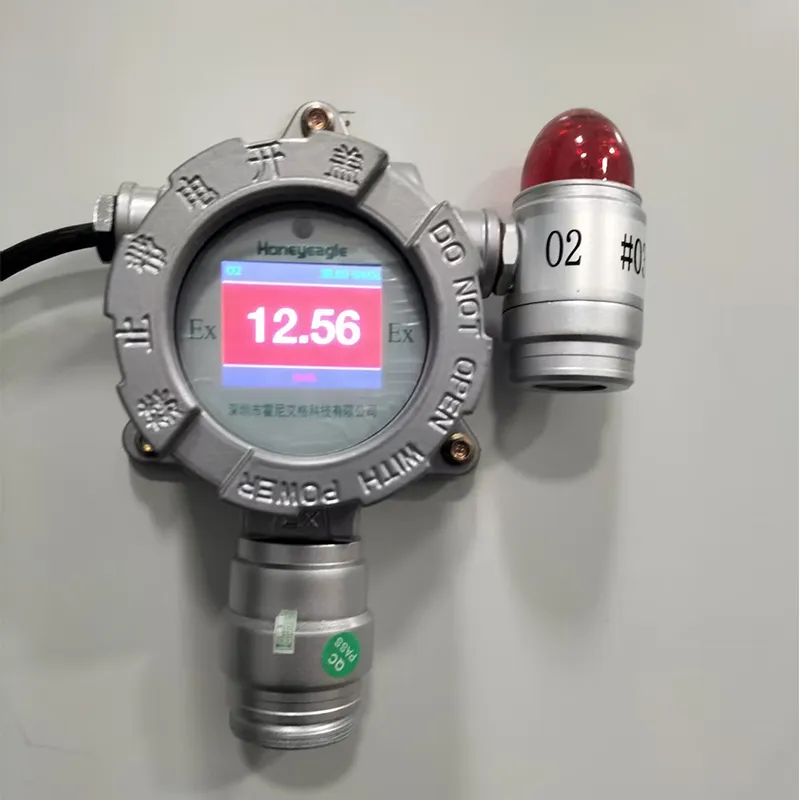
Explosion-Proof (Ex) Certification
In petrochemical and chemical plants, flammable gases and vapors are often present alongside inert gases. A fixed O2 detector must feature a rugged, explosion-proof enclosure (Ex-rated) to ensure the electrical components inside the device never act as an ignition source.
High-Intensity Sound and Light Alarms
In a noisy industrial facility where workers wear hearing protection, a subtle beep is useless. As seen in the image above, a premium fixed detector features an integrated, high-intensity visual strobe (the red beacon) and a piercing audible siren. This localized alarm instantly warns workers in the immediate vicinity to evacuate and prevents others from walking into the affected area.
Seamless PLC/DCS Integration
A standalone alarm is good, but a connected system is better. Modern fixed oxygen detectors offer standard 4-20mA analog output and RS485 (Modbus RTU) digital communication. This allows the device to integrate directly into the plant’s central PLC, SCADA, or DCS systems. In the event of an O2 drop, the system can automatically trigger emergency exhaust fans, shut off gas supply valves, and alert the central control room.
Ideal Installation Locations for Oxygen Monitors
To maximize safety, EHS (Environment, Health, and Safety) managers should install fixed O2 detectors in high-risk zones, including:
-
Pharmaceutical Cleanrooms: Near bioreactors and lyophilizers where N2 or liquid nitrogen is heavily utilized.
-
Petrochemical Storage Areas: Around tank farms utilizing nitrogen blanketing systems.
-
Confined Spaces: Underground utility trenches, basements, and pump rooms where heavier-than-air gases (like Ar or CO2) might pool, or lighter gases might displace oxygen.
-
Gas Cylinder Storage: Anywhere pressurized inert gas cylinders or cryogenic dewars are stored or manifolded.
Frequently Asked Questions (FAQs)
What is the safe oxygen (O2) level in a workplace?
According to OSHA (Occupational Safety and Health Administration), the optimal oxygen level in a breathing atmosphere is between 19.5% and 23.5%. An atmosphere containing less than 19.5% O2 is defined as oxygen-deficient and requires immediate evacuation or supplied-air respirators.
How do you detect a nitrogen (N2) leak?
Because nitrogen is invisible and odorless, you cannot detect it with your senses. The only reliable way to detect a nitrogen leak is by measuring the displacement of ambient O2 using a fixed oxygen gas detector equipped with an electrochemical or zirconia sensor.
How often should fixed oxygen detectors be calibrated?
For industrial environments, it is generally recommended to calibrate fixed O2 detectors every 3 to 6 months, depending on the manufacturer's specifications and the harshness of the operating environment (e.g., extreme temperatures or high humidity). Regular bump testing should also be conducted to verify sensor response.
Discover how fixed oxygen detectors prevent fatal asphyxiation caused by nitrogen and argon leaks in chemical, petrochemical, and pharmaceutical plants. Ensure OSHA compliance and worker safety.
Inert gases like Nitrogen (N2), Argon (Ar), and Carbon Dioxide (CO2) are indispensable in modern manufacturing. From serving as blanketing gases in petrochemical storage tanks to acting as reaction mediums in pharmaceutical cleanrooms, they are the lifeblood of industrial processes.
However, they carry a deadly secret: they are colorless, odorless, and tasteless. When a pipe leaks or a valve fails, these inert gases rapidly displace ambient oxygen (O2). Because the human body cannot detect oxygen deprivation—only carbon dioxide buildup—workers can lose consciousness in seconds without ever feeling breathless. This makes inert gas asphyxiation one of the leading "silent killers" in industrial environments.
The Invisible Threat in Chemical and Pharmaceutical Plants
In chemical and pharmaceutical manufacturing, inert gases are frequently used in large volumes to prevent fires, explosions, or product oxidation. A sudden flange failure or operational error can release a massive cloud of N2 into a confined or poorly ventilated space.
When the O2 concentration drops below the safe threshold of 19.5% by volume, cognitive functions impair rapidly. If levels drop below 10%, a worker will faint almost instantly, leading to fatal consequences if not rescued immediately.
Why Portable Monitors Aren't Enough
While portable gas detectors are crucial personal protective equipment (PPE), they have a critical limitation: they only warn the person already inside the hazardous area. By the time a portable monitor alarms in a severe inert gas leak, the worker may already be too disoriented to escape.
To achieve true proactive safety, facilities must install a continuous, 24/7 monitoring system that alerts personnel before they enter the danger zone.
Essential Features of an Industrial-Grade Fixed Oxygen Detector
To effectively protect your workforce and comply with strict safety regulations, an industrial oxygen monitoring system must possess specific capabilities.
Explosion-Proof (Ex) Certification
In petrochemical and chemical plants, flammable gases and vapors are often present alongside inert gases. A fixed O2 detector must feature a rugged, explosion-proof enclosure (Ex-rated) to ensure the electrical components inside the device never act as an ignition source.
High-Intensity Sound and Light Alarms
In a noisy industrial facility where workers wear hearing protection, a subtle beep is useless. As seen in the image above, a premium fixed detector features an integrated, high-intensity visual strobe (the red beacon) and a piercing audible siren. This localized alarm instantly warns workers in the immediate vicinity to evacuate and prevents others from walking into the affected area.
Seamless PLC/DCS Integration
A standalone alarm is good, but a connected system is better. Modern fixed oxygen detectors offer standard 4-20mA analog output and RS485 (Modbus RTU) digital communication. This allows the device to integrate directly into the plant’s central PLC, SCADA, or DCS systems. In the event of an O2 drop, the system can automatically trigger emergency exhaust fans, shut off gas supply valves, and alert the central control room.
Ideal Installation Locations for Oxygen Monitors
To maximize safety, EHS (Environment, Health, and Safety) managers should install fixed O2 detectors in high-risk zones, including:
-
Pharmaceutical Cleanrooms: Near bioreactors and lyophilizers where N2 or liquid nitrogen is heavily utilized.
-
Petrochemical Storage Areas: Around tank farms utilizing nitrogen blanketing systems.
-
Confined Spaces: Underground utility trenches, basements, and pump rooms where heavier-than-air gases (like Ar or CO2) might pool, or lighter gases might displace oxygen.
-
Gas Cylinder Storage: Anywhere pressurized inert gas cylinders or cryogenic dewars are stored or manifolded.
Frequently Asked Questions (FAQs)
What is the safe oxygen (O2) level in a workplace?
According to OSHA (Occupational Safety and Health Administration), the optimal oxygen level in a breathing atmosphere is between 19.5% and 23.5%. An atmosphere containing less than 19.5% O2 is defined as oxygen-deficient and requires immediate evacuation or supplied-air respirators.
How do you detect a nitrogen (N2) leak?
Because nitrogen is invisible and odorless, you cannot detect it with your senses. The only reliable way to detect a nitrogen leak is by measuring the displacement of ambient O2 using a fixed oxygen gas detector equipped with an electrochemical or zirconia sensor.
How often should fixed oxygen detectors be calibrated?
For industrial environments, it is generally recommended to calibrate fixed O2 detectors every 3 to 6 months, depending on the manufacturer's specifications and the harshness of the operating environment (e.g., extreme temperatures or high humidity). Regular bump testing should also be conducted to verify sensor response.
no data
Contact Us





Fill out the form