

Fixed Carbon Monoxide Detectors Safeguard Underground Parking Garage Safety
Release time:2026-01-30
Source:Skyeaglee
Real-World Application Case: Fixed Carbon Monoxide Detectors Safeguard Underground Parking Garage Safety
Underground parking garages are critical urban infrastructure, but their enclosed, poorly ventilated environments pose a hidden risk: carbon monoxide (CO) buildup from vehicle exhaust. In high-traffic periods, CO can accumulate rapidly to toxic levels, threatening the lives of drivers, passengers, and maintenance staff. This case explores how a client deployed a network of carbon monoxide detector systems to mitigate this hazard, creating a safer parking environment.
1. Client Background & Core Safety Challenges
The client manages a 3,200 sqm underground parking garage serving a mixed-use commercial building. With over 150 daily vehicle entries and exits, the garage faced persistent CO accumulation issues, especially during morning and evening rush hours. Prior to upgrading their safety systems, the facility relied solely on basic smoke detector devices, which failed to detect CO—a colorless, odorless gas that is far more insidious than smoke.
Key pain points included:
Invisible toxicity: CO concentrations often exceeded 30ppm during peak hours, but staff had no way to monitor this in real time.
Poor ventilation response: Manual exhaust fan activation was slow, leading to prolonged exposure risks.
Fragmented monitoring: There was no centralized system to track air quality across the entire garage, making it impossible to identify high-risk zones proactively.
The client urgently needed a dedicated carbon monoxide sensor and gas detector solution to enable real-time monitoring, automated alarms, and linked ventilation control.
2. Tailored Solution: Fixed Carbon Monoxide Detector Deployment
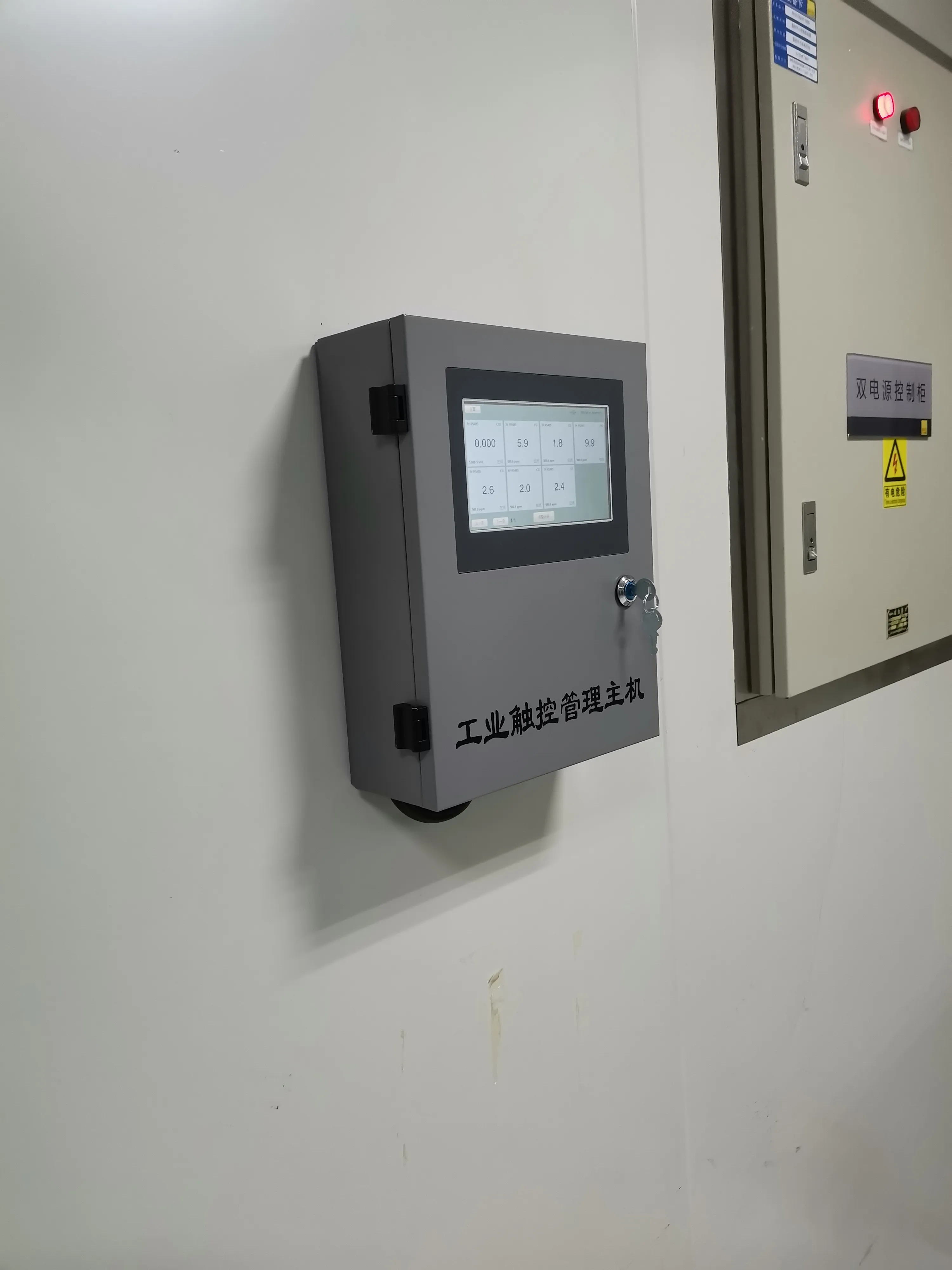
After a comprehensive site assessment, the client implemented a layered safety system centered on fixed carbon monoxide monitor devices, paired with a centralized gas control panel in the security office.
Deployment Strategy
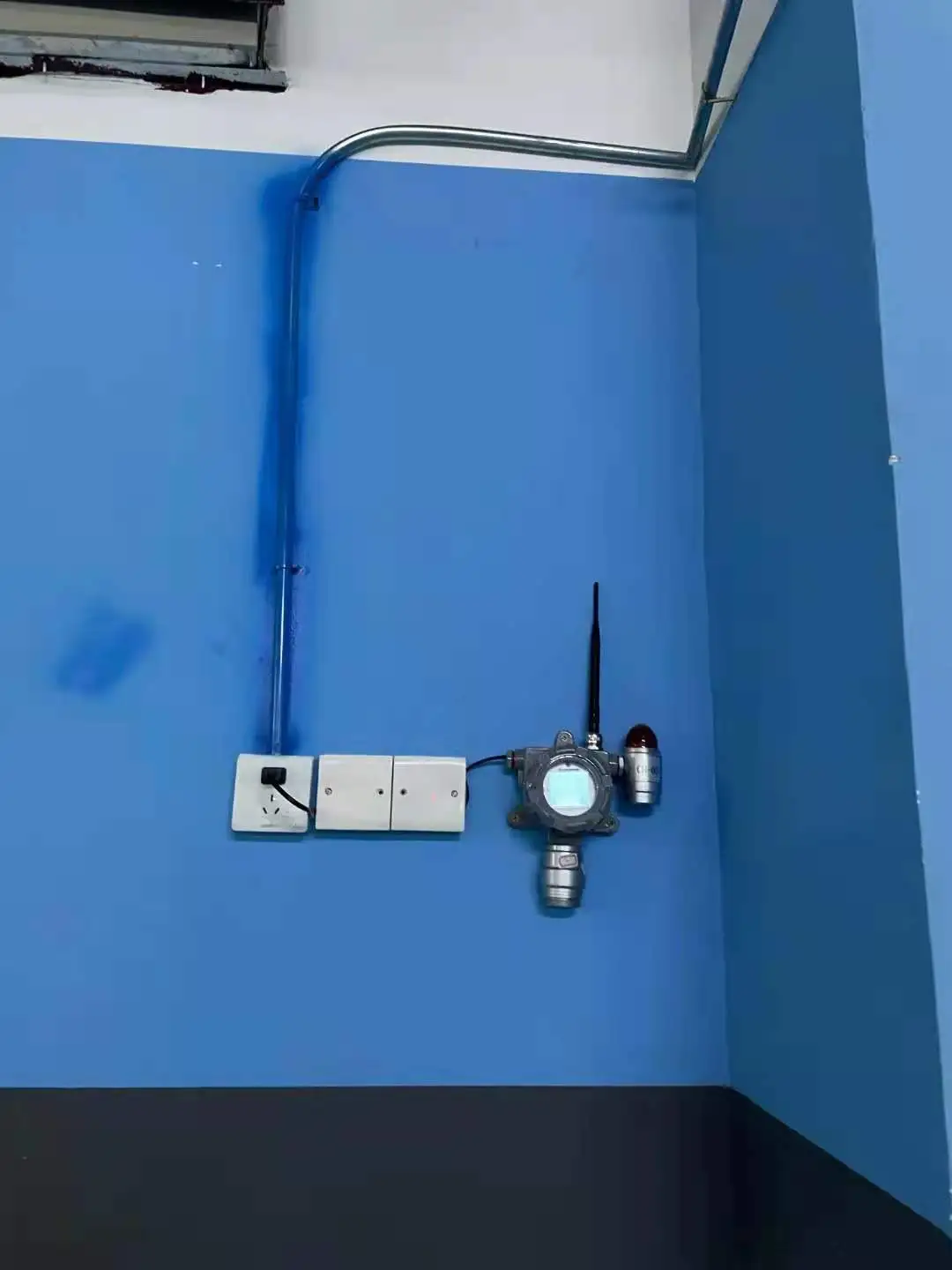
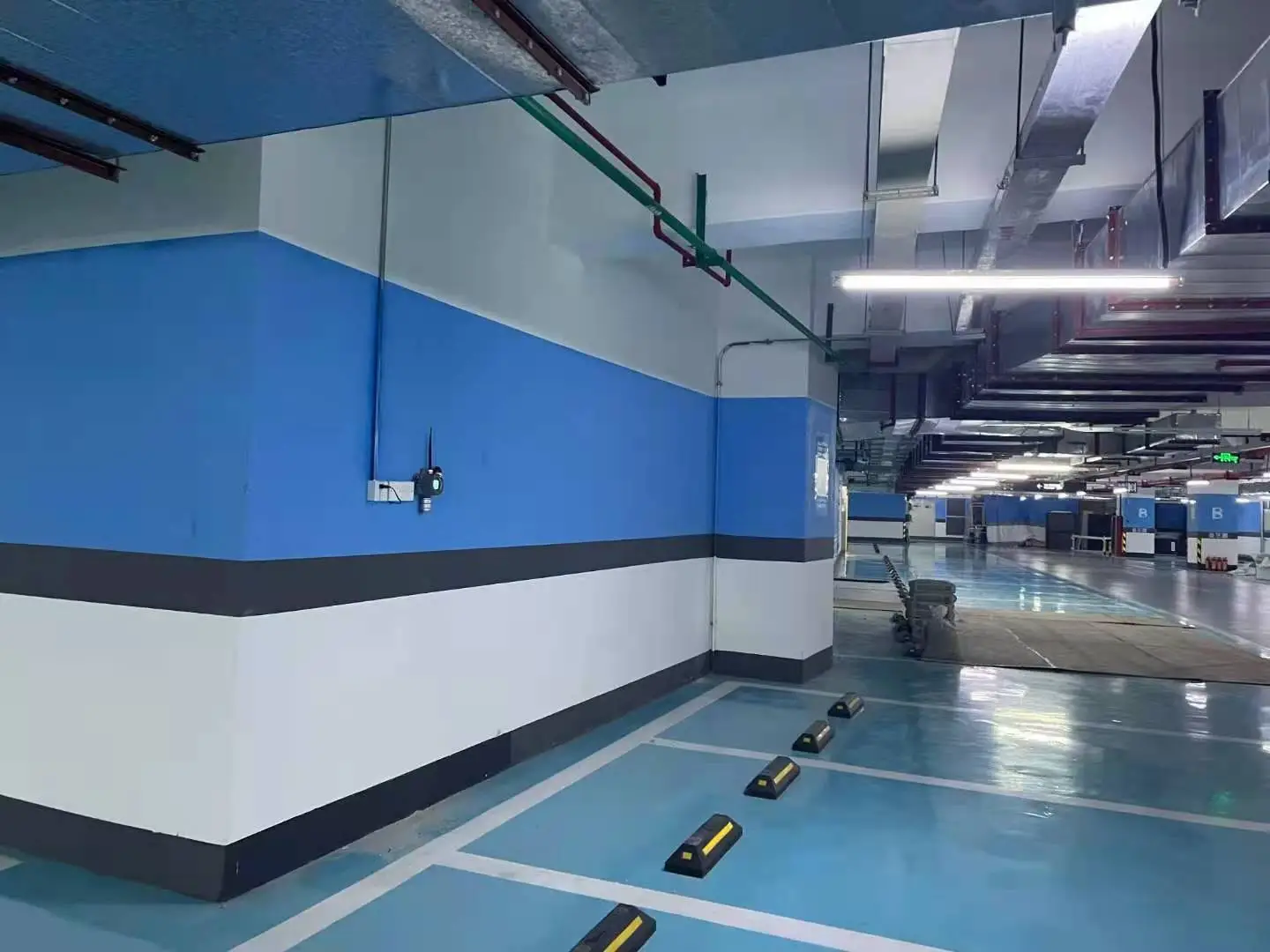
Coverage planning: Each carbon monoxide detector was calibrated to monitor up to 50 sqm of space. Based on the garage’s layout, 68 devices were strategically installed near vehicle entry points, parking bays, and stairwells—areas where CO buildup is most likely.
Centralized control: All detectors were connected to a gas control panel in the security room, which aggregated data via RS485 communication signals. The panel also integrated 4-20mA analog outputs to link with the garage’s existing exhaust fan system.
Automated response triggers: The system was programmed to activate a carbon monoxide alarm (or CO Alarm) when concentrations reached 25ppm (warning threshold) and trigger full exhaust fan operation at 50ppm (action threshold).
This setup transformed the garage from a reactive to a proactive safety environment, with the air quality monitor network working in tandem with mechanical systems to neutralize risks.
3. Implementation & Operational Outcomes
Since the system went live, the client has seen dramatic improvements in safety and operational efficiency:
Real-time visibility: Security staff now use the gas control panel to monitor live CO readings from every carbon monoxide detector alarm across the garage. The RS485 signal ensures stable, low-latency data transmission, even in the garage’s concrete-reinforced environment.
Rapid hazard mitigation: During a recent morning rush, CO concentrations near the entry ramp spiked to 52ppm. Within 3 seconds, the carbon monoxide alarm activated, and the linked exhaust fans automatically engaged. Within 8 minutes, levels dropped to a safe 12ppm—well before any staff or visitors reported symptoms.
Simplified maintenance: The 4-20mA output signals allow the facility team to conduct remote performance checks on each carbon monoxide sensor, reducing the need for manual site inspections.
Staff confidence: Security personnel report that the centralized gas control panel has made their roles far more manageable, as they no longer need to patrol the garage to assess air quality. The system’s clear alerts and automated actions have eliminated guesswork from safety protocols.
In a post-implementation review, the client’s operations manager noted: “This gas detector system doesn’t just meet safety regulations—it gives us complete control over our garage’s air quality. The carbon monoxide monitor network has turned a hidden risk into a visible, manageable factor.”
4. Case Conclusion
This case demonstrates the critical role of specialized carbon monoxide detector systems in protecting enclosed public spaces like parking garages. By combining targeted device deployment, centralized monitoring via a gas control panel, and automated ventilation triggers, the client has created a safety infrastructure that prioritizes both human life and operational efficiency.
For facilities managers, the key takeaway is clear: relying on smoke detector devices alone is insufficient to address CO risks. A purpose-built air quality monitor network, equipped with carbon monoxide alarm capabilities, is essential to safeguarding environments where vehicle exhaust is a persistent threat.
Real-World Application Case: Fixed Carbon Monoxide Detectors Safeguard Underground Parking Garage Safety
Underground parking garages are critical urban infrastructure, but their enclosed, poorly ventilated environments pose a hidden risk: carbon monoxide (CO) buildup from vehicle exhaust. In high-traffic periods, CO can accumulate rapidly to toxic levels, threatening the lives of drivers, passengers, and maintenance staff. This case explores how a client deployed a network of carbon monoxide detector systems to mitigate this hazard, creating a safer parking environment.
1. Client Background & Core Safety Challenges
The client manages a 3,200 sqm underground parking garage serving a mixed-use commercial building. With over 150 daily vehicle entries and exits, the garage faced persistent CO accumulation issues, especially during morning and evening rush hours. Prior to upgrading their safety systems, the facility relied solely on basic smoke detector devices, which failed to detect CO—a colorless, odorless gas that is far more insidious than smoke.
Key pain points included:
Invisible toxicity: CO concentrations often exceeded 30ppm during peak hours, but staff had no way to monitor this in real time.
Poor ventilation response: Manual exhaust fan activation was slow, leading to prolonged exposure risks.
Fragmented monitoring: There was no centralized system to track air quality across the entire garage, making it impossible to identify high-risk zones proactively.
The client urgently needed a dedicated carbon monoxide sensor and gas detector solution to enable real-time monitoring, automated alarms, and linked ventilation control.
2. Tailored Solution: Fixed Carbon Monoxide Detector Deployment
After a comprehensive site assessment, the client implemented a layered safety system centered on fixed carbon monoxide monitor devices, paired with a centralized gas control panel in the security office.
Deployment Strategy
Coverage planning: Each carbon monoxide detector was calibrated to monitor up to 50 sqm of space. Based on the garage’s layout, 68 devices were strategically installed near vehicle entry points, parking bays, and stairwells—areas where CO buildup is most likely.
Centralized control: All detectors were connected to a gas control panel in the security room, which aggregated data via RS485 communication signals. The panel also integrated 4-20mA analog outputs to link with the garage’s existing exhaust fan system.
Automated response triggers: The system was programmed to activate a carbon monoxide alarm (or CO Alarm) when concentrations reached 25ppm (warning threshold) and trigger full exhaust fan operation at 50ppm (action threshold).
This setup transformed the garage from a reactive to a proactive safety environment, with the air quality monitor network working in tandem with mechanical systems to neutralize risks.
3. Implementation & Operational Outcomes
Since the system went live, the client has seen dramatic improvements in safety and operational efficiency:
Real-time visibility: Security staff now use the gas control panel to monitor live CO readings from every carbon monoxide detector alarm across the garage. The RS485 signal ensures stable, low-latency data transmission, even in the garage’s concrete-reinforced environment.
Rapid hazard mitigation: During a recent morning rush, CO concentrations near the entry ramp spiked to 52ppm. Within 3 seconds, the carbon monoxide alarm activated, and the linked exhaust fans automatically engaged. Within 8 minutes, levels dropped to a safe 12ppm—well before any staff or visitors reported symptoms.
Simplified maintenance: The 4-20mA output signals allow the facility team to conduct remote performance checks on each carbon monoxide sensor, reducing the need for manual site inspections.
Staff confidence: Security personnel report that the centralized gas control panel has made their roles far more manageable, as they no longer need to patrol the garage to assess air quality. The system’s clear alerts and automated actions have eliminated guesswork from safety protocols.
In a post-implementation review, the client’s operations manager noted: “This gas detector system doesn’t just meet safety regulations—it gives us complete control over our garage’s air quality. The carbon monoxide monitor network has turned a hidden risk into a visible, manageable factor.”
4. Case Conclusion
This case demonstrates the critical role of specialized carbon monoxide detector systems in protecting enclosed public spaces like parking garages. By combining targeted device deployment, centralized monitoring via a gas control panel, and automated ventilation triggers, the client has created a safety infrastructure that prioritizes both human life and operational efficiency.
For facilities managers, the key takeaway is clear: relying on smoke detector devices alone is insufficient to address CO risks. A purpose-built air quality monitor network, equipped with carbon monoxide alarm capabilities, is essential to safeguarding environments where vehicle exhaust is a persistent threat.
no data
Contact Us





Fill out the form