

Fixed Oxygen Detectors Safeguard Confined Space Safety in Ship Repair
Release time:2026-01-31
Source:Skyeaglee
Real-World Application Case: Fixed Oxygen Detectors Safeguard Confined Space Safety in Ship Repair
Ship repair is a high-risk industry where technicians frequently work in enclosed, poorly ventilated confined spaces—from ballast tanks and fuel storage compartments to engine rooms and cargo holds. These environments are prone to rapid oxygen depletion (due to inert gas purging or organic material decomposition) or oxygen enrichment (from leaky medical oxygen systems), both of which pose fatal risks to personnel. This case explores how a ship repair client deployed a gas detection system centered on fixed oxygen detector devices, paired with polyurethane tube sampling, to mitigate these hazards and ensure compliance with maritime safety regulations.
1. Client Background & Core Safety Challenges
The client is a maritime maintenance firm specializing in dry-dock repairs for commercial vessels, including bulk carriers and container ships. Their daily operations require technicians to enter confined spaces for tasks like welding, cleaning, and component replacement. Prior to adopting a dedicated monitoring solution, the team relied on handheld oxygen monitor devices for pre-entry checks—a process that was slow, labor-intensive, and unable to provide real-time data during prolonged work shifts.
Key pain points included:
Invisible hazards: Oxygen levels in tanks could drop below 19.5% (the OSHA-defined safe threshold) or rise above 23.5% (a fire explosion risk) without warning, even after initial pre-entry tests.
Limited reach: Handheld devices could not access deep, narrow sections of tanks, leaving blind spots where oxygen imbalances might go undetected.
Regulatory pressure: Maritime authorities (including IMO and USCG) mandate continuous environmental monitoring equipment for confined space operations, which the client’s manual process failed to meet.
Inefficient response: Without a centralized gas detection system, the team could not trigger immediate alarms or ventilation adjustments when oxygen levels shifted.
The client urgently needed a fixed oxygen gas detector solution that could provide continuous, remote monitoring of confined spaces, with reliable data transmission and compliance-ready reporting.
2. Tailored Solution: Fixed Oxygen Detector Deployment with Polyurethane Tube Sampling
After a site audit, the client implemented a layered safety system built around fixed O2 detector units, optimized for ship repair’s unique challenges:
Core Components & Deployment Strategy
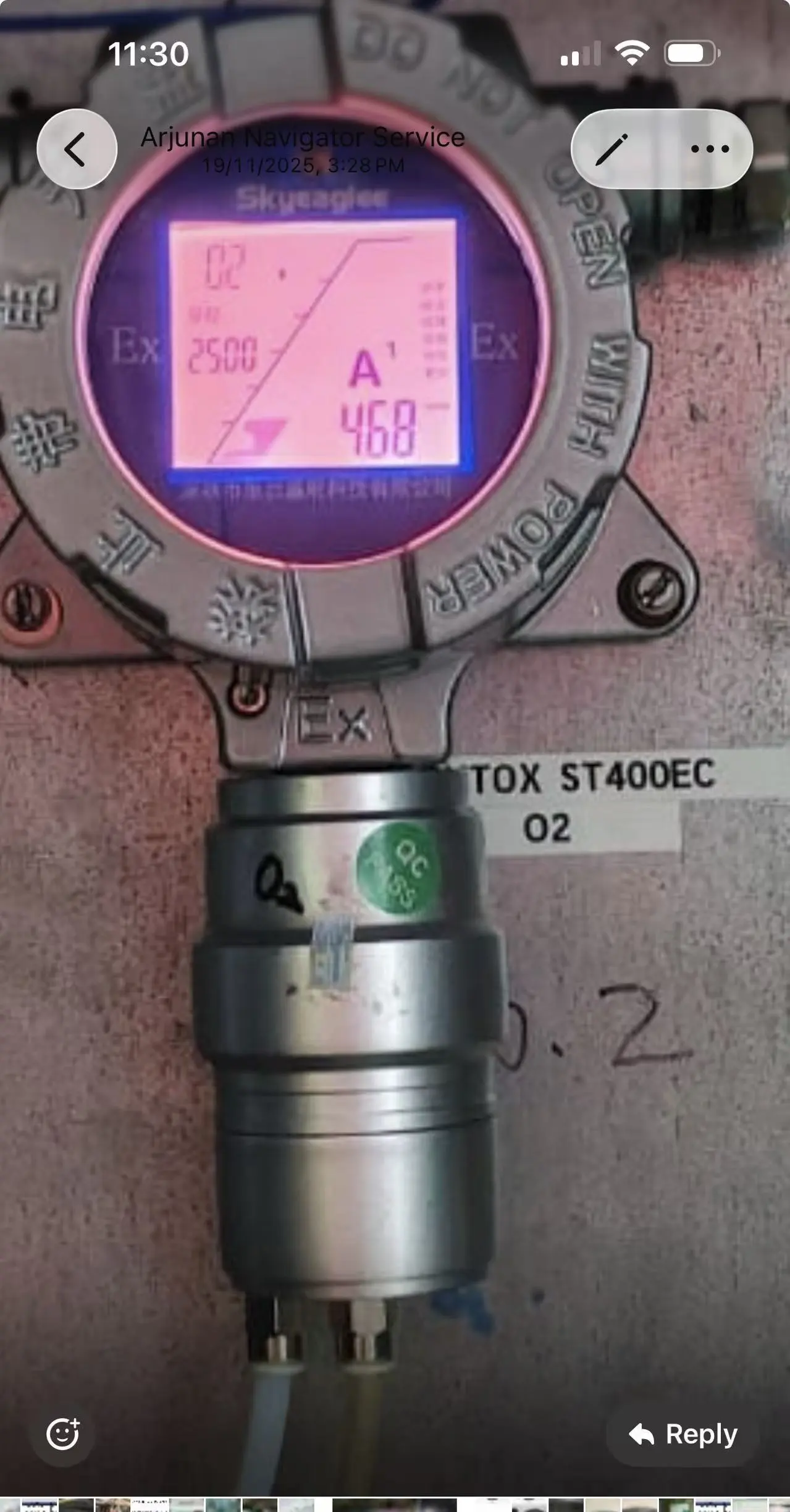
Sensor Technology: Each unit was equipped with an electrochemical oxygen sensor (O2 sensor) calibrated to a 0-25% VOL detection range—ideal for capturing both hypoxia (low O₂) and hyperoxia (high O₂) events. The oxygen analyzer (o2 analyzer) design ensured high accuracy even in humid, salt-laden marine environments.
Remote Sampling via Polyurethane Tubes: To access hard-to-reach tank interiors, the client used flexible, chemical-resistant polyurethane sampling tubes (up to 20m in length) connected to each oxygen detector for confined space. This allowed the gas sensor detector to draw air samples from deep within tanks, eliminating blind spots.
Stable Data Transmission: Every o2 gas detector transmitted real-time readings via a 4-20mA analog signal to a centralized control panel in the on-site safety office. This industrial-grade signal ensured reliable data transfer even in noisy electrical environments common on shipyards.
Integrated Multi-Gas Monitoring: The system was paired with complementary toxic gas monitor and co2 gas detector units, creating a comprehensive multi gas detector network that tracked both oxygen levels and other hazardous gases (e.g., CO, H₂S) in confined spaces.
Automated Alerts & Actions: The gas detection system was programmed to trigger an oxygen detector alarm when O₂ levels fell below 19.5% VOL or exceeded 23.5% VOL. Alerts were sent to the control panel and linked to ventilation fans, which activated automatically to restore safe air quality.
3. Implementation Outcomes & Client Feedback
Since the system went live, the client has seen transformative improvements in safety, efficiency, and regulatory compliance:
Continuous Real-Time Monitoring: The fixed oxygen monitor network, paired with polyurethane tube sampling, provides 24/7 visibility into confined space air quality. Technicians no longer need to re-enter tanks for manual checks, reducing exposure risks by 60%.
Rapid Hazard Mitigation: During a recent fuel tank cleaning project, the O2 sensor detected a drop in oxygen to 18.2% VOL within 3 minutes of the team entering the space. The oxygen detector alarm triggered instantly, and ventilation fans activated automatically, restoring levels to 20.8% VOL in under 10 minutes—preventing a potential hypoxia incident.
Regulatory Compliance: The gas detection system now generates automated, time-stamped reports of oxygen levels, which the client submits to maritime authorities to demonstrate adherence to IMO safety standards. This has eliminated costly compliance audits and fines.
Operational Efficiency: The 4-20mA signal’s stability has reduced maintenance downtime, as the oxygen analyzer units require only quarterly calibration (vs. monthly for handheld devices). The centralized control panel also acts as an air quality monitor for the entire shipyard, streamlining safety management.
In a post-implementation interview, the client’s safety manager noted: “This gas detector system has redefined how we approach confined space safety. The polyurethane tube sampling lets us monitor areas we could never reach before, and the 4-20mA signal ensures we never miss a critical alert. Our technicians now work with far greater confidence, knowing the oxygen gas detector network has their backs.”
4. Case Conclusion
This case underscores the critical role of specialized oxygen detector systems in high-risk maritime environments. By combining electrochemical oxygen sensor technology, polyurethane tube remote sampling, and a centralized gas detection system, the client has turned a hidden safety risk into a manageable, monitored process.
For ship repair firms and other industries working with confined spaces, the key takeaway is clear: relying on handheld devices is no longer sufficient. A fixed o2 detector network, integrated with environmental monitoring equipment and automated response tools, is essential to protecting personnel, meeting regulations, and optimizing operational efficiency.
Real-World Application Case: Fixed Oxygen Detectors Safeguard Confined Space Safety in Ship Repair
Ship repair is a high-risk industry where technicians frequently work in enclosed, poorly ventilated confined spaces—from ballast tanks and fuel storage compartments to engine rooms and cargo holds. These environments are prone to rapid oxygen depletion (due to inert gas purging or organic material decomposition) or oxygen enrichment (from leaky medical oxygen systems), both of which pose fatal risks to personnel. This case explores how a ship repair client deployed a gas detection system centered on fixed oxygen detector devices, paired with polyurethane tube sampling, to mitigate these hazards and ensure compliance with maritime safety regulations.
1. Client Background & Core Safety Challenges
The client is a maritime maintenance firm specializing in dry-dock repairs for commercial vessels, including bulk carriers and container ships. Their daily operations require technicians to enter confined spaces for tasks like welding, cleaning, and component replacement. Prior to adopting a dedicated monitoring solution, the team relied on handheld oxygen monitor devices for pre-entry checks—a process that was slow, labor-intensive, and unable to provide real-time data during prolonged work shifts.
Key pain points included:
Invisible hazards: Oxygen levels in tanks could drop below 19.5% (the OSHA-defined safe threshold) or rise above 23.5% (a fire explosion risk) without warning, even after initial pre-entry tests.
Limited reach: Handheld devices could not access deep, narrow sections of tanks, leaving blind spots where oxygen imbalances might go undetected.
Regulatory pressure: Maritime authorities (including IMO and USCG) mandate continuous environmental monitoring equipment for confined space operations, which the client’s manual process failed to meet.
Inefficient response: Without a centralized gas detection system, the team could not trigger immediate alarms or ventilation adjustments when oxygen levels shifted.
The client urgently needed a fixed oxygen gas detector solution that could provide continuous, remote monitoring of confined spaces, with reliable data transmission and compliance-ready reporting.
2. Tailored Solution: Fixed Oxygen Detector Deployment with Polyurethane Tube Sampling
After a site audit, the client implemented a layered safety system built around fixed O2 detector units, optimized for ship repair’s unique challenges:
Core Components & Deployment Strategy
Sensor Technology: Each unit was equipped with an electrochemical oxygen sensor (O2 sensor) calibrated to a 0-25% VOL detection range—ideal for capturing both hypoxia (low O₂) and hyperoxia (high O₂) events. The oxygen analyzer (o2 analyzer) design ensured high accuracy even in humid, salt-laden marine environments.
Remote Sampling via Polyurethane Tubes: To access hard-to-reach tank interiors, the client used flexible, chemical-resistant polyurethane sampling tubes (up to 20m in length) connected to each oxygen detector for confined space. This allowed the gas sensor detector to draw air samples from deep within tanks, eliminating blind spots.
Stable Data Transmission: Every o2 gas detector transmitted real-time readings via a 4-20mA analog signal to a centralized control panel in the on-site safety office. This industrial-grade signal ensured reliable data transfer even in noisy electrical environments common on shipyards.
Integrated Multi-Gas Monitoring: The system was paired with complementary toxic gas monitor and co2 gas detector units, creating a comprehensive multi gas detector network that tracked both oxygen levels and other hazardous gases (e.g., CO, H₂S) in confined spaces.
Automated Alerts & Actions: The gas detection system was programmed to trigger an oxygen detector alarm when O₂ levels fell below 19.5% VOL or exceeded 23.5% VOL. Alerts were sent to the control panel and linked to ventilation fans, which activated automatically to restore safe air quality.
3. Implementation Outcomes & Client Feedback
Since the system went live, the client has seen transformative improvements in safety, efficiency, and regulatory compliance:
Continuous Real-Time Monitoring: The fixed oxygen monitor network, paired with polyurethane tube sampling, provides 24/7 visibility into confined space air quality. Technicians no longer need to re-enter tanks for manual checks, reducing exposure risks by 60%.
Rapid Hazard Mitigation: During a recent fuel tank cleaning project, the O2 sensor detected a drop in oxygen to 18.2% VOL within 3 minutes of the team entering the space. The oxygen detector alarm triggered instantly, and ventilation fans activated automatically, restoring levels to 20.8% VOL in under 10 minutes—preventing a potential hypoxia incident.
Regulatory Compliance: The gas detection system now generates automated, time-stamped reports of oxygen levels, which the client submits to maritime authorities to demonstrate adherence to IMO safety standards. This has eliminated costly compliance audits and fines.
Operational Efficiency: The 4-20mA signal’s stability has reduced maintenance downtime, as the oxygen analyzer units require only quarterly calibration (vs. monthly for handheld devices). The centralized control panel also acts as an air quality monitor for the entire shipyard, streamlining safety management.
In a post-implementation interview, the client’s safety manager noted: “This gas detector system has redefined how we approach confined space safety. The polyurethane tube sampling lets us monitor areas we could never reach before, and the 4-20mA signal ensures we never miss a critical alert. Our technicians now work with far greater confidence, knowing the oxygen gas detector network has their backs.”
4. Case Conclusion
This case underscores the critical role of specialized oxygen detector systems in high-risk maritime environments. By combining electrochemical oxygen sensor technology, polyurethane tube remote sampling, and a centralized gas detection system, the client has turned a hidden safety risk into a manageable, monitored process.
For ship repair firms and other industries working with confined spaces, the key takeaway is clear: relying on handheld devices is no longer sufficient. A fixed o2 detector network, integrated with environmental monitoring equipment and automated response tools, is essential to protecting personnel, meeting regulations, and optimizing operational efficiency.
no data
Contact Us





Fill out the form