

voc toxic gas detectors portable case
Release time:2026-02-28
Source:Skyeaglee
Real World Application Case Portable VOC Toxic Gas Detectors for Industrial Solvent Safety
This case describes the application of portable VOC toxic gas detectors in a company engaged in metal processing and coating production. The facility regularly uses Hi-Tec Exxsol D60 solvent in its manufacturing operations, and reliable gas detection is essential to protect workers from harmful volatile organic compounds.
Client Background and Workplace Safety Challenges
The client uses Hi-Tec Exxsol D60 solvent in metal processing and coating applications, including architectural coatings and road marking paints. This solvent is composed mainly of C11-C12 alkanes and cycloalkanes. It is deeply hydrotreated to provide very low aromatic content, negligible reactive impurities, and a mild low odor. The product does not contain detectable levels of polycyclic aromatic hydrocarbons, heavy metals, or chlorinated compounds.
According to health and safety standards for hazardous substances in workplace air, short-term exposure to VOC gases can irritate the eyes, nose, and throat, causing discomfort or pain. Long-term exposure carries serious health risks, including potential damage to the liver and kidneys. Benzene, formaldehyde, and other VOCs are classified as carcinogenic by international cancer research agencies. Prolonged exposure may increase the risk of leukemia, nasopharyngeal cancer, chronic respiratory diseases, and reduced nervous system function.
The client faced a critical detection problem. They had previously purchased an electrochemical VOC gas detector in Australia, but this type of sensor could not detect benzene series, hydrocarbons, and similar volatile gases commonly present in their work environment. This limitation created a major safety gap, as the primary risks in their facility came from these hydrocarbon-based VOCs.
The client also required clear guidance on the proper storage and handling of Hi-Tec Exxsol D60. With appropriate precautions, the solvent remains stable in technical performance for at least 12 months. Reliable VOC monitoring supports safe storage and daily operational management.
Solution and Product Selection
To solve these challenges, the client adopted a new VOC detection solution based on advanced PID sensing technology. The system uses a high-precision VOC sensor with a 10.6 eV ultraviolet lamp, which provides accurate and selective detection of most volatile organic compounds.
The 10.6 eV energy level is higher than the ionization energy of most VOCs, which typically ranges from 8 to 12 eV, allowing the sensor to ionize these compounds and generate stable current signals. At the same time, this energy level is lower than the ionization energy of major air components such as oxygen and nitrogen, so it does not ionize background air. This results in high selectivity, low background interference, and stable measurement performance.
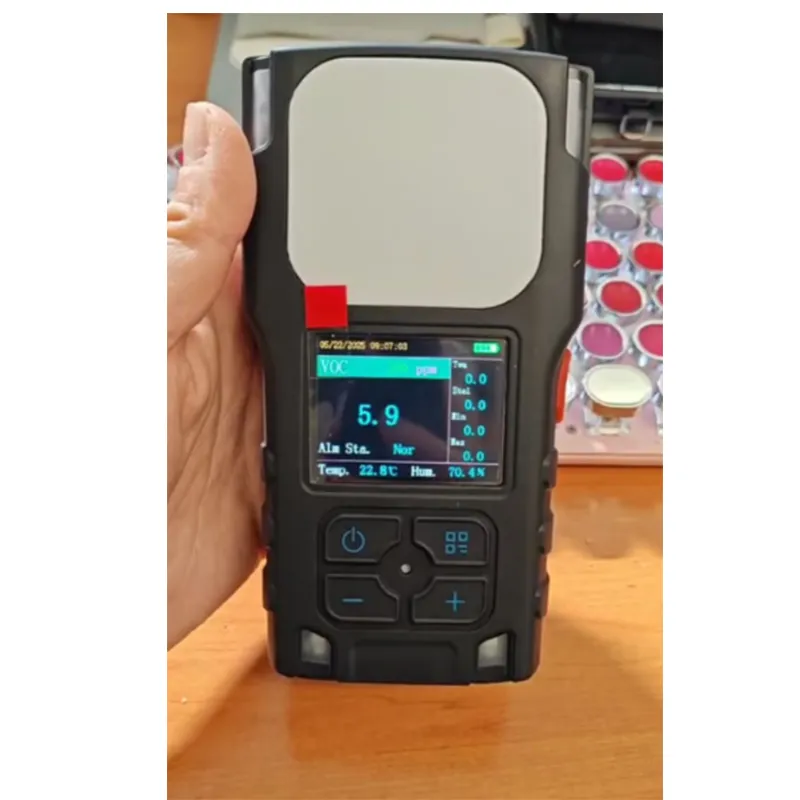
After evaluating all available options, the user selected and purchased the HNAG920 portable gas detector, which fully matches their safety protocols and operational requirements. This handheld VOC gas detector is designed for real-time monitoring in industrial work areas, storage zones, and near processing equipment.
Application Benefits and Outcomes
The new VOC gas detector system has effectively resolved the client’s previous detection limitations. Unlike electrochemical sensors, the PID-based Volatile Organic Compounds detector can reliably identify benzene series, hydrocarbons, and other VOCs generated by Hi-Tec Exxsol D60 solvent.
The gas analyzer portable unit supports continuous monitoring in production areas, storage rooms, and coating application zones. The Volatile Organic Compounds sensor provides fast response and accurate readings, enabling early warning before VOC concentrations reach harmful levels.
Workers can carry the handheld VOC gas detector during daily operations, inspections, and maintenance tasks. The device supports risk assessment, ventilation control, and safe handling of solvents. With proper storage and monitoring, the client maintains stable solvent performance and reduces health risks for on-site personnel.
Case Conclusion
This application shows that PID-based portable VOC toxic gas detectors provide reliable and effective monitoring for workplaces using hydrocarbon solvents such as Hi-Tec Exxsol D60. The VOC sensor and VOC gas detector overcome the limitations of traditional electrochemical instruments, enabling accurate detection of benzene and hydrocarbon compounds.
The combination of real-time monitoring, early warning, and safe handling guidelines helps protect workers from short-term irritation and long-term health risks. The gas analyzer portable and handheld VOC gas detector have become essential safety tools for maintaining a secure and compliant working environment in metal processing and coating industries.
Real World Application Case Portable VOC Toxic Gas Detectors for Industrial Solvent Safety
This case describes the application of portable VOC toxic gas detectors in a company engaged in metal processing and coating production. The facility regularly uses Hi-Tec Exxsol D60 solvent in its manufacturing operations, and reliable gas detection is essential to protect workers from harmful volatile organic compounds.
Client Background and Workplace Safety Challenges
The client uses Hi-Tec Exxsol D60 solvent in metal processing and coating applications, including architectural coatings and road marking paints. This solvent is composed mainly of C11-C12 alkanes and cycloalkanes. It is deeply hydrotreated to provide very low aromatic content, negligible reactive impurities, and a mild low odor. The product does not contain detectable levels of polycyclic aromatic hydrocarbons, heavy metals, or chlorinated compounds.
According to health and safety standards for hazardous substances in workplace air, short-term exposure to VOC gases can irritate the eyes, nose, and throat, causing discomfort or pain. Long-term exposure carries serious health risks, including potential damage to the liver and kidneys. Benzene, formaldehyde, and other VOCs are classified as carcinogenic by international cancer research agencies. Prolonged exposure may increase the risk of leukemia, nasopharyngeal cancer, chronic respiratory diseases, and reduced nervous system function.
The client faced a critical detection problem. They had previously purchased an electrochemical VOC gas detector in Australia, but this type of sensor could not detect benzene series, hydrocarbons, and similar volatile gases commonly present in their work environment. This limitation created a major safety gap, as the primary risks in their facility came from these hydrocarbon-based VOCs.
The client also required clear guidance on the proper storage and handling of Hi-Tec Exxsol D60. With appropriate precautions, the solvent remains stable in technical performance for at least 12 months. Reliable VOC monitoring supports safe storage and daily operational management.
Solution and Product Selection
To solve these challenges, the client adopted a new VOC detection solution based on advanced PID sensing technology. The system uses a high-precision VOC sensor with a 10.6 eV ultraviolet lamp, which provides accurate and selective detection of most volatile organic compounds.
The 10.6 eV energy level is higher than the ionization energy of most VOCs, which typically ranges from 8 to 12 eV, allowing the sensor to ionize these compounds and generate stable current signals. At the same time, this energy level is lower than the ionization energy of major air components such as oxygen and nitrogen, so it does not ionize background air. This results in high selectivity, low background interference, and stable measurement performance.
After evaluating all available options, the user selected and purchased the HNAG920 portable gas detector, which fully matches their safety protocols and operational requirements. This handheld VOC gas detector is designed for real-time monitoring in industrial work areas, storage zones, and near processing equipment.
Application Benefits and Outcomes
The new VOC gas detector system has effectively resolved the client’s previous detection limitations. Unlike electrochemical sensors, the PID-based Volatile Organic Compounds detector can reliably identify benzene series, hydrocarbons, and other VOCs generated by Hi-Tec Exxsol D60 solvent.
The gas analyzer portable unit supports continuous monitoring in production areas, storage rooms, and coating application zones. The Volatile Organic Compounds sensor provides fast response and accurate readings, enabling early warning before VOC concentrations reach harmful levels.
Workers can carry the handheld VOC gas detector during daily operations, inspections, and maintenance tasks. The device supports risk assessment, ventilation control, and safe handling of solvents. With proper storage and monitoring, the client maintains stable solvent performance and reduces health risks for on-site personnel.
Case Conclusion
This application shows that PID-based portable VOC toxic gas detectors provide reliable and effective monitoring for workplaces using hydrocarbon solvents such as Hi-Tec Exxsol D60. The VOC sensor and VOC gas detector overcome the limitations of traditional electrochemical instruments, enabling accurate detection of benzene and hydrocarbon compounds.
The combination of real-time monitoring, early warning, and safe handling guidelines helps protect workers from short-term irritation and long-term health risks. The gas analyzer portable and handheld VOC gas detector have become essential safety tools for maintaining a secure and compliant working environment in metal processing and coating industries.
no data
Contact Us





Fill out the form