

Real World Application Case: Low Concentration O2 Meter Safeguards Welding Pipe Operations
Release time:2026-02-25
Source:Skyeaglee
Welding operations in industrial pipe systems are critical but high-risk, especially when working with enclosed or semi-enclosed pipe sections. While oxygen is essential for safe welding, low concentrations of oxygen in welding pipes can lead to severe hazards—including incomplete combustion, poor weld quality, and even safety risks for on-site operators. This case shares how a pipe welding company deployed a low concentration O2 meter and portable oxygen detector solutions to monitor oxygen levels in welding pipes, ensuring operational safety and weld quality consistency.
Client Background & Core Safety Challenges
The client specializes in industrial pipe welding services, undertaking projects for petrochemical, construction, and infrastructure sectors. Their daily operations involve welding large-diameter pipes, many of which are semi-enclosed or require pre-welding purging with inert gases (such as argon or nitrogen) to prevent oxidation of the weld seam. This purging process often displaces oxygen in the pipe, leading to low oxygen concentrations that pose dual risks to both operators and work quality.
Before adopting a dedicated oxygen monitoring solution, the client faced several critical challenges. First, the lack of real-time oxygen monitoring meant operators could not accurately assess the oxygen level inside the pipe before and during welding. If oxygen concentrations were too low (below safe thresholds), the inert gas purge would be excessive, leading to incomplete combustion of the welding electrode, porous welds, and rework costs. Second, prolonged exposure to low-oxygen environments, even at low concentrations, could cause dizziness and fatigue in operators, affecting work efficiency and safety. Third, the client relied on rough estimates of inert gas purging time, which often resulted in either insufficient purging (causing weld oxidation) or excessive purging (wasting gas and increasing costs).
The client urgently needed a reliable oxygen gas detector solution—including a low concentration O2 meter with a 0-1000 ppm range—to monitor oxygen levels in welding pipes in real time, ensure safe operation, optimize purging processes, and improve weld quality.
Tailored Solution: O2 Meter & Portable Oxygen Detector Deployment
After a comprehensive assessment of the client’s welding processes, pipe sizes, and on-site working conditions, a targeted monitoring solution was implemented, centered on low concentration O2 meter devices and supplemented by portable oxygen detector tools for flexible, full-coverage monitoring.
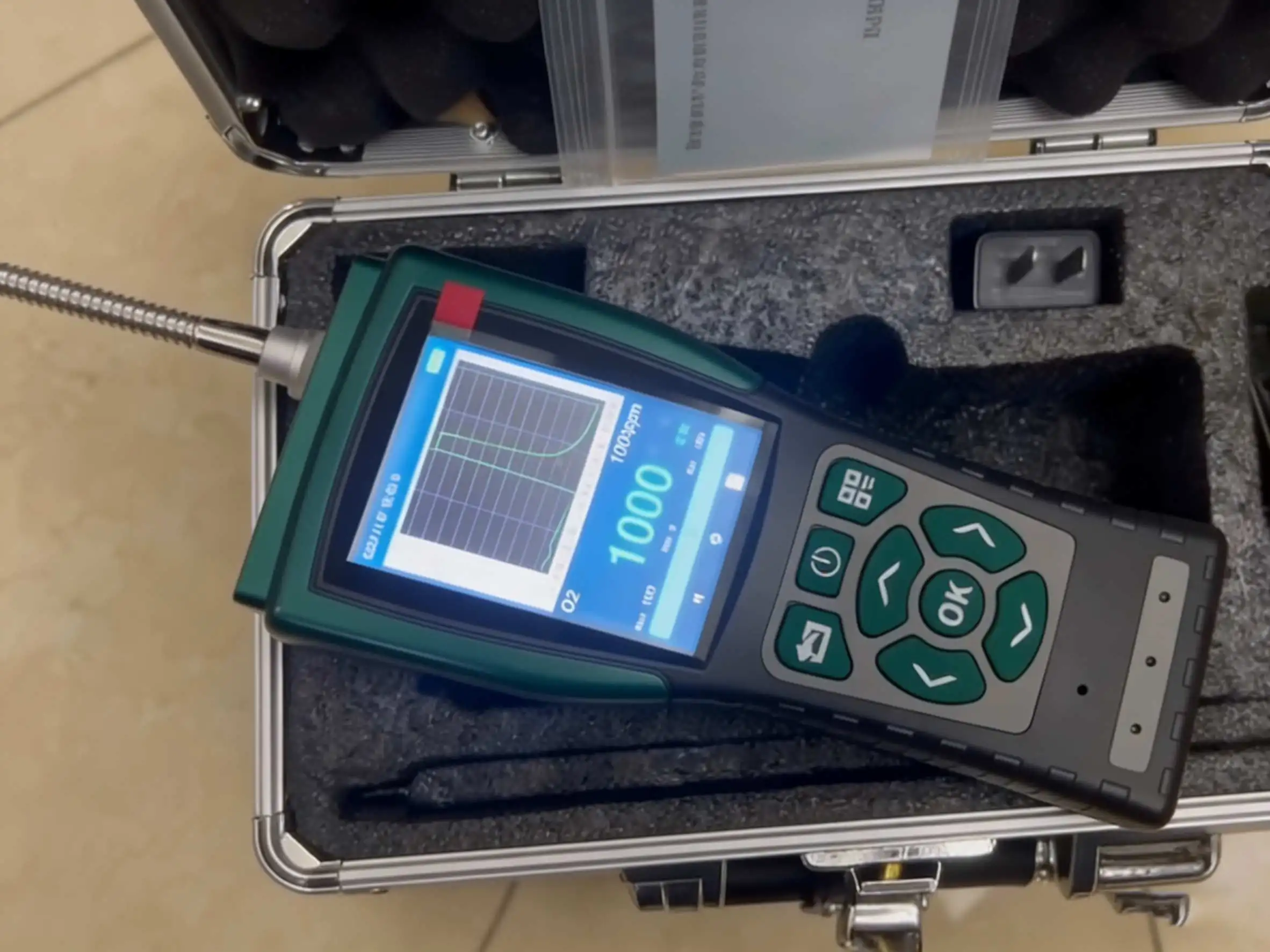
The core of the solution was a low concentration O2 meter with a detection range of 0-1000ppm, specifically calibrated to measure low oxygen levels in enclosed pipe sections. These O2 meter devices were designed to be compact and easy to install inside welding pipes—either inserted through small access points or attached to the pipe ends before welding. The O2 meter provided real-time digital readings, allowing operators to quickly assess oxygen concentrations before initiating the welding process.
To complement the fixed O2 meter deployment, the client equipped each welding team with a portable oxygen detector. These portable devices were lightweight and easy to carry, enabling operators to conduct spot checks on different pipe sections, especially in hard-to-reach areas where fixed O2 meter devices could not be installed. The portable oxygen detector shared the same 0-1000ppm range as the O2 meter, ensuring consistency in monitoring data and accurate assessment of low oxygen levels across all work areas.
The oxygen gas detector system was integrated into the client’s pre-welding and welding workflows. Before purging, operators used the O2 meter to measure the initial oxygen level in the pipe. During purging, they monitored the O2 meter readings in real time, stopping the purging process once the oxygen concentration dropped to the optimal range (100-300ppm) for welding. The portable oxygen detector was used to verify readings at multiple points along the pipe, ensuring no blind spots in monitoring. If oxygen levels fell too low (below 100ppm) or rose unexpectedly, the oxygen gas detector devices issued audible alerts, prompting operators to adjust the purging process or pause welding to ensure safety.
Operational Outcomes & Client Feedback
Since the deployment of the O2 meter and portable oxygen detector system, the client has achieved significant improvements in operational safety, weld quality, and cost efficiency, addressing all previously identified challenges.
In terms of weld quality, the low concentration O2 meter has eliminated the problem of excessive or insufficient inert gas purging. By monitoring oxygen levels in real time, operators can now maintain the optimal oxygen concentration (600ppm) during welding, resulting in a 40% reduction in rework rates. Porous and oxidized welds, which were previously a common issue, have become nearly non-existent, improving the overall durability and safety of the welded pipes.
For operational safety, the portable oxygen detector and O2 meter have eliminated the risk of operator exposure to low-oxygen environments. Alerts from the oxygen gas detector devices ensure that operators can quickly adjust the work environment before any health risks arise. The client reported a 100% reduction in safety incidents related to low oxygen levels, and operators noted increased comfort and confidence during work, as they no longer have to rely on guesswork to assess pipe conditions.
Cost efficiency has also improved significantly. The precise monitoring provided by the O2 meter has reduced inert gas waste by 25%, as purging stops as soon as the optimal oxygen level is reached. Additionally, the reduction in rework has saved the client time and material costs, improving overall project profitability.
In a post-implementation interview, the client’s welding operations manager noted, “The O2 meter and portable oxygen detector have transformed our welding processes. We no longer have to rely on estimates or guesswork—we have real-time data to ensure safe, high-quality welding every time. The oxygen gas detector system is easy to use, reliable, and has become an essential tool for our teams. It has not only improved our safety record but also saved us significant costs in rework and gas waste.”
Case Conclusion
This case demonstrates the critical role of a low concentration O2 meter and portable oxygen detector in ensuring the safety and quality of welding pipe operations. For companies working with enclosed or semi-enclosed pipe welding, accurate monitoring of low oxygen levels (0-1000ppm) is essential to prevent safety hazards, improve weld quality, and optimize operational costs.
The client’s success highlights that a well-designed oxygen gas detector solution—combining fixed O2 meter devices for continuous monitoring and portable oxygen detector tools for flexible spot checks—can address the unique challenges of welding pipe operations. By providing real-time, accurate oxygen level data, these devices enable operators to make informed decisions, reduce risks, and improve overall operational efficiency.
For any organization involved in pipe welding or similar industrial processes that require inert gas purging, investing in a reliable O2 meter and portable oxygen detector is a critical step toward ensuring safety, quality, and cost-effectiveness.
Recommended Products
Welding operations in industrial pipe systems are critical but high-risk, especially when working with enclosed or semi-enclosed pipe sections. While oxygen is essential for safe welding, low concentrations of oxygen in welding pipes can lead to severe hazards—including incomplete combustion, poor weld quality, and even safety risks for on-site operators. This case shares how a pipe welding company deployed a low concentration O2 meter and portable oxygen detector solutions to monitor oxygen levels in welding pipes, ensuring operational safety and weld quality consistency.
Client Background & Core Safety Challenges
The client specializes in industrial pipe welding services, undertaking projects for petrochemical, construction, and infrastructure sectors. Their daily operations involve welding large-diameter pipes, many of which are semi-enclosed or require pre-welding purging with inert gases (such as argon or nitrogen) to prevent oxidation of the weld seam. This purging process often displaces oxygen in the pipe, leading to low oxygen concentrations that pose dual risks to both operators and work quality.
Before adopting a dedicated oxygen monitoring solution, the client faced several critical challenges. First, the lack of real-time oxygen monitoring meant operators could not accurately assess the oxygen level inside the pipe before and during welding. If oxygen concentrations were too low (below safe thresholds), the inert gas purge would be excessive, leading to incomplete combustion of the welding electrode, porous welds, and rework costs. Second, prolonged exposure to low-oxygen environments, even at low concentrations, could cause dizziness and fatigue in operators, affecting work efficiency and safety. Third, the client relied on rough estimates of inert gas purging time, which often resulted in either insufficient purging (causing weld oxidation) or excessive purging (wasting gas and increasing costs).
The client urgently needed a reliable oxygen gas detector solution—including a low concentration O2 meter with a 0-1000 ppm range—to monitor oxygen levels in welding pipes in real time, ensure safe operation, optimize purging processes, and improve weld quality.
Tailored Solution: O2 Meter & Portable Oxygen Detector Deployment
After a comprehensive assessment of the client’s welding processes, pipe sizes, and on-site working conditions, a targeted monitoring solution was implemented, centered on low concentration O2 meter devices and supplemented by portable oxygen detector tools for flexible, full-coverage monitoring.
The core of the solution was a low concentration O2 meter with a detection range of 0-1000ppm, specifically calibrated to measure low oxygen levels in enclosed pipe sections. These O2 meter devices were designed to be compact and easy to install inside welding pipes—either inserted through small access points or attached to the pipe ends before welding. The O2 meter provided real-time digital readings, allowing operators to quickly assess oxygen concentrations before initiating the welding process.
To complement the fixed O2 meter deployment, the client equipped each welding team with a portable oxygen detector. These portable devices were lightweight and easy to carry, enabling operators to conduct spot checks on different pipe sections, especially in hard-to-reach areas where fixed O2 meter devices could not be installed. The portable oxygen detector shared the same 0-1000ppm range as the O2 meter, ensuring consistency in monitoring data and accurate assessment of low oxygen levels across all work areas.
The oxygen gas detector system was integrated into the client’s pre-welding and welding workflows. Before purging, operators used the O2 meter to measure the initial oxygen level in the pipe. During purging, they monitored the O2 meter readings in real time, stopping the purging process once the oxygen concentration dropped to the optimal range (100-300ppm) for welding. The portable oxygen detector was used to verify readings at multiple points along the pipe, ensuring no blind spots in monitoring. If oxygen levels fell too low (below 100ppm) or rose unexpectedly, the oxygen gas detector devices issued audible alerts, prompting operators to adjust the purging process or pause welding to ensure safety.
Operational Outcomes & Client Feedback
Since the deployment of the O2 meter and portable oxygen detector system, the client has achieved significant improvements in operational safety, weld quality, and cost efficiency, addressing all previously identified challenges.
In terms of weld quality, the low concentration O2 meter has eliminated the problem of excessive or insufficient inert gas purging. By monitoring oxygen levels in real time, operators can now maintain the optimal oxygen concentration (600ppm) during welding, resulting in a 40% reduction in rework rates. Porous and oxidized welds, which were previously a common issue, have become nearly non-existent, improving the overall durability and safety of the welded pipes.
For operational safety, the portable oxygen detector and O2 meter have eliminated the risk of operator exposure to low-oxygen environments. Alerts from the oxygen gas detector devices ensure that operators can quickly adjust the work environment before any health risks arise. The client reported a 100% reduction in safety incidents related to low oxygen levels, and operators noted increased comfort and confidence during work, as they no longer have to rely on guesswork to assess pipe conditions.
Cost efficiency has also improved significantly. The precise monitoring provided by the O2 meter has reduced inert gas waste by 25%, as purging stops as soon as the optimal oxygen level is reached. Additionally, the reduction in rework has saved the client time and material costs, improving overall project profitability.
In a post-implementation interview, the client’s welding operations manager noted, “The O2 meter and portable oxygen detector have transformed our welding processes. We no longer have to rely on estimates or guesswork—we have real-time data to ensure safe, high-quality welding every time. The oxygen gas detector system is easy to use, reliable, and has become an essential tool for our teams. It has not only improved our safety record but also saved us significant costs in rework and gas waste.”
Case Conclusion
This case demonstrates the critical role of a low concentration O2 meter and portable oxygen detector in ensuring the safety and quality of welding pipe operations. For companies working with enclosed or semi-enclosed pipe welding, accurate monitoring of low oxygen levels (0-1000ppm) is essential to prevent safety hazards, improve weld quality, and optimize operational costs.
The client’s success highlights that a well-designed oxygen gas detector solution—combining fixed O2 meter devices for continuous monitoring and portable oxygen detector tools for flexible spot checks—can address the unique challenges of welding pipe operations. By providing real-time, accurate oxygen level data, these devices enable operators to make informed decisions, reduce risks, and improve overall operational efficiency.
For any organization involved in pipe welding or similar industrial processes that require inert gas purging, investing in a reliable O2 meter and portable oxygen detector is a critical step toward ensuring safety, quality, and cost-effectiveness.
Recommended Products
no data
Contact Us





Fill out the form