

Indoor Fireworks Concentration Box Gas Detection Scheme
Release time:2026-04-11
Source:Skyeaglee
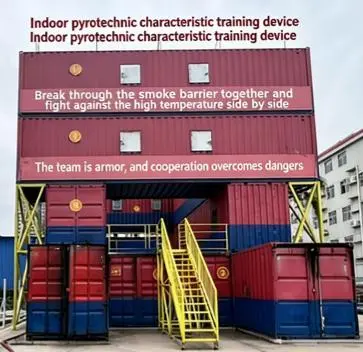
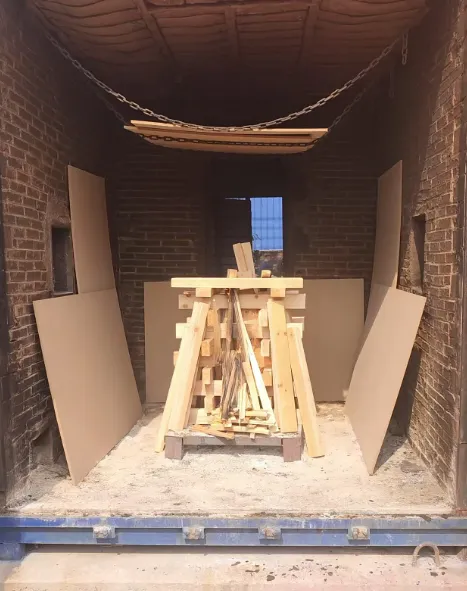
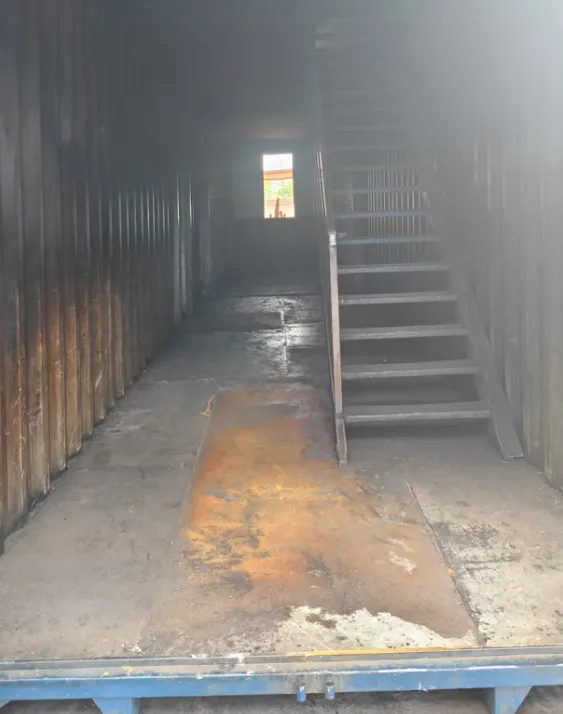
The indoor fire smoke characteristic training device generates a large amount of carbon monoxide by burning wood. The first room is the combustion chamber, and the second room is the escape passage. It is necessary to detect the carbon monoxide produced by the combustion of a large amount of wood in a closed environment and the oxygen content.
 |
 |
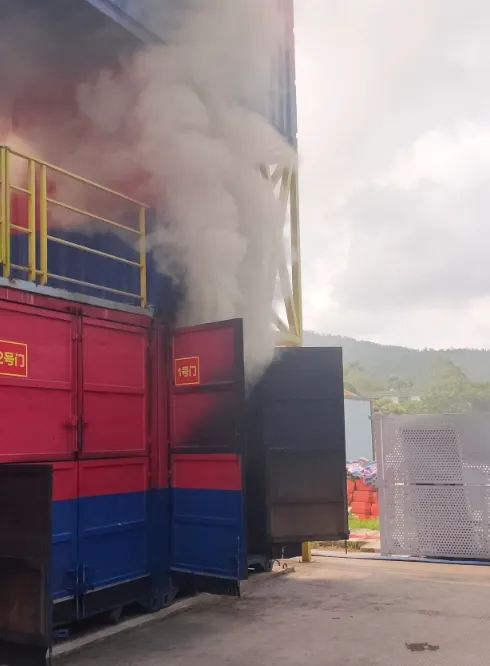
It is necessary to detect the high-temperature gas carbon monoxide and oxygen in the room. Generally, instruments cannot be used under high-temperature conditions, so a pump suction sampling method is adopted. The gas is extracted from the room for sampling. Considering the long-term use, if too much dust is inhaled, it may cause the pipeline to get clogged. A 316L stainless steel sampling probe combined with a stainless steel filter screen is used for sampling to avoid excessive dust causing the sampling pipeline to be blocked.
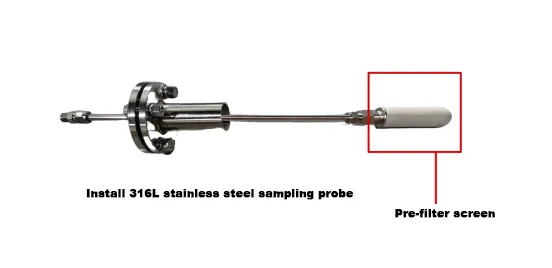
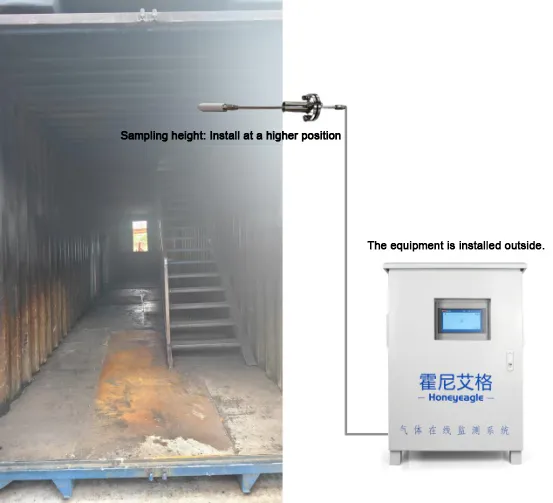
A hole is drilled in the door to install the sampling probe at a high position inside the room. Since carbon monoxide is lighter than air, the gas tends to accumulate upwards. Mounting it at a high level enables better detection.
After passing through the sampling probe, the sampled gas enters the stainless steel pipeline and is then delivered to the equipment for detection.
Inside the equipment:
The sampled gas first passes through the filter for secondary filtration to remove dust and impurities.
(In applications with high humidity, moisture, or temperature, the gas is first drawn by the sampling pump to an electronic condenser. The electronic condenser is mainly used for cooling and dehumidification to prevent secondary condensation of water vapor caused by temperature. It uses semiconductor condensation dehumidification to condense moisture into water and drain it out.)
The air pump draws in the gas, and the rotor flowmeter controls the gas flow rate (normally set at 0.3–0.5 L/min).
Finally, the gas enters the instrument for detection.
(The instrument shall operate within an ambient temperature range of -20°C to 60°C.)
Water generated in the filter can be automatically drained via a peristaltic pump.
Range selection is configured according to actual working conditions:
CO measuring range: 0–50% VOL (infrared detection principle)------Resolution: 0.01% VOL
O₂ measuring range: 0–30% VOL (electrochemical principle)------Resolution: 0.01% VOL
The equipment supports data logging, and the data storage interval can be set as required.
An optional function allows real-time concentration viewing via mobile phone or computer, enabling remote monitoring without being on-site.
The indoor fire smoke characteristic training device generates a large amount of carbon monoxide by burning wood. The first room is the combustion chamber, and the second room is the escape passage. It is necessary to detect the carbon monoxide produced by the combustion of a large amount of wood in a closed environment and the oxygen content.
|
|
It is necessary to detect the high-temperature gas carbon monoxide and oxygen in the room. Generally, instruments cannot be used under high-temperature conditions, so a pump suction sampling method is adopted. The gas is extracted from the room for sampling. Considering the long-term use, if too much dust is inhaled, it may cause the pipeline to get clogged. A 316L stainless steel sampling probe combined with a stainless steel filter screen is used for sampling to avoid excessive dust causing the sampling pipeline to be blocked.
A hole is drilled in the door to install the sampling probe at a high position inside the room. Since carbon monoxide is lighter than air, the gas tends to accumulate upwards. Mounting it at a high level enables better detection.
After passing through the sampling probe, the sampled gas enters the stainless steel pipeline and is then delivered to the equipment for detection.
Inside the equipment:
The sampled gas first passes through the filter for secondary filtration to remove dust and impurities.
(In applications with high humidity, moisture, or temperature, the gas is first drawn by the sampling pump to an electronic condenser. The electronic condenser is mainly used for cooling and dehumidification to prevent secondary condensation of water vapor caused by temperature. It uses semiconductor condensation dehumidification to condense moisture into water and drain it out.)
The air pump draws in the gas, and the rotor flowmeter controls the gas flow rate (normally set at 0.3–0.5 L/min).
Finally, the gas enters the instrument for detection.
(The instrument shall operate within an ambient temperature range of -20°C to 60°C.)
Water generated in the filter can be automatically drained via a peristaltic pump.
Range selection is configured according to actual working conditions:
CO measuring range: 0–50% VOL (infrared detection principle)------Resolution: 0.01% VOL
O₂ measuring range: 0–30% VOL (electrochemical principle)------Resolution: 0.01% VOL
The equipment supports data logging, and the data storage interval can be set as required.
An optional function allows real-time concentration viewing via mobile phone or computer, enabling remote monitoring without being on-site.
no data
Contact Us





Fill out the form