

Fixed Multi Gas Detector for Confined Spaces
Release time:2026-08-10
Source:来源
Application Case: Fixed Multi Gas Detector in Underground Confined Spaces
In industrial safety management, monitoring underground environments and low-lying areas is critical. Recently, our team deployed a high-performance fixed multi gas detector in an underground manhole/trench, a typical confined space with poor natural ventilation. This case highlights how real-time gas monitoring safeguards infrastructure maintenance and prevents catastrophic accidents.
Why Confined Spaces Require a 4-in-1 Gas Monitor
Underground trenches, drainage systems, and wastewater pits are prone to hazardous gas accumulations. Utilizing a professional confined space gas detector is essential because it simultaneously addresses three core safety requirements: explosion prevention, toxic gas protection, and asphyxiation prevention.
Monitoring the Standard Four Gases (CH4, O2, H2S, CO)
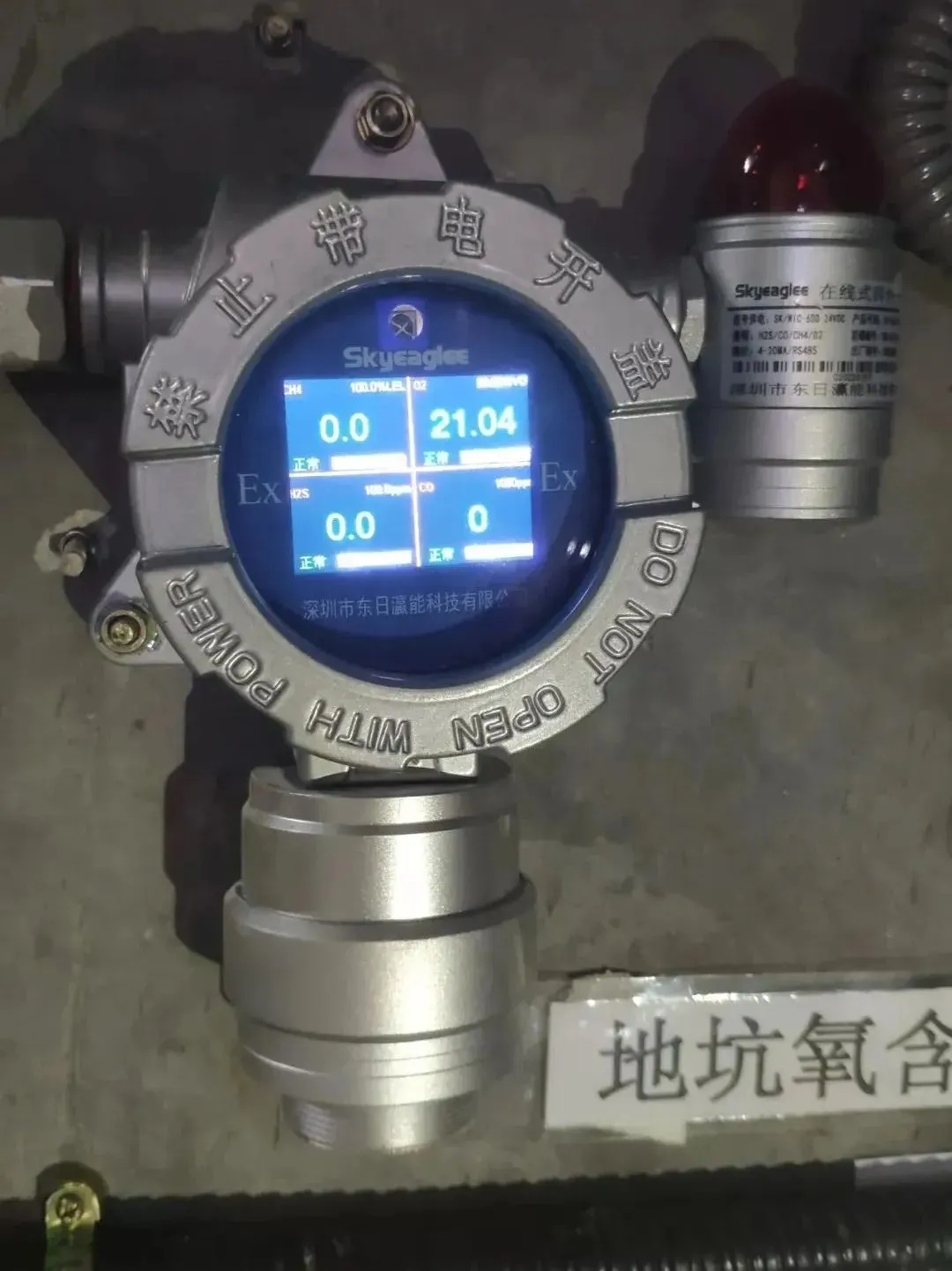
As shown on the high-definition display of our combustible and toxic gas transmitter, the device tracks four essential parameters simultaneously:
CH4 (Methane): Microbial decomposition and organic fermentation in stagnant water easily generate flammable methane or biogas. Monitoring prevents potential explosions.
O2 (Oxygen): Oxidation reactions, rust, or gas displacement can cause oxygen levels to plummet, posing severe asphyxiation risks to workers.
H2S (Hydrogen Sulfide): A highly toxic gas generated by organic sludge breakdown in drainage systems.
CO (Carbon Monoxide): Often introduced by nearby combustion engines or exhaust fumes settling into low-lying trenches.
Conclusion and Safety Value
This successful installation demonstrates the vital role of a robust industrial gas safety system. By combining explosion-proof design with real-time detection of flammable and toxic elements, facilities can ensure absolute compliance and worker safety in high-risk environments.
Application Case: Fixed Multi Gas Detector in Underground Confined Spaces
In industrial safety management, monitoring underground environments and low-lying areas is critical. Recently, our team deployed a high-performance fixed multi gas detector in an underground manhole/trench, a typical confined space with poor natural ventilation. This case highlights how real-time gas monitoring safeguards infrastructure maintenance and prevents catastrophic accidents.
Why Confined Spaces Require a 4-in-1 Gas Monitor
Underground trenches, drainage systems, and wastewater pits are prone to hazardous gas accumulations. Utilizing a professional confined space gas detector is essential because it simultaneously addresses three core safety requirements: explosion prevention, toxic gas protection, and asphyxiation prevention.
Monitoring the Standard Four Gases (CH4, O2, H2S, CO)
As shown on the high-definition display of our combustible and toxic gas transmitter, the device tracks four essential parameters simultaneously:
CH4 (Methane): Microbial decomposition and organic fermentation in stagnant water easily generate flammable methane or biogas. Monitoring prevents potential explosions.
O2 (Oxygen): Oxidation reactions, rust, or gas displacement can cause oxygen levels to plummet, posing severe asphyxiation risks to workers.
H2S (Hydrogen Sulfide): A highly toxic gas generated by organic sludge breakdown in drainage systems.
CO (Carbon Monoxide): Often introduced by nearby combustion engines or exhaust fumes settling into low-lying trenches.
Conclusion and Safety Value
This successful installation demonstrates the vital role of a robust industrial gas safety system. By combining explosion-proof design with real-time detection of flammable and toxic elements, facilities can ensure absolute compliance and worker safety in high-risk environments.
no data
Contact Us





Fill out the form