

Fixed Combustible Gas Detectors Safeguard Biogas Collection Pipeline Safety
Release time:2026-02-03
Source:Skyeaglee
Real-World Application Case: Fixed Combustible Gas Detectors Safeguard Biogas Collection Pipeline Safety
Biogas production, a cornerstone of sustainable waste-to-energy systems, relies on capturing methane (CH₄) from organic matter to generate heat and electricity. However, CH₄ is highly flammable, with an explosive lower limit (LEL) of 5% by volume—meaning even a small leak in biogas collection pipelines can trigger catastrophic explosions, halt production, and endanger personnel. This case explores how a biogas facility deployed a network of fixed Combustible gas detector systems to monitor CH₄ levels in pipelines, mitigating explosion risks and ensuring uninterrupted operational safety.
1. Client Background & Core Safety Challenges
The client operates a medium-scale biogas processing facility that converts agricultural waste into biogas for on-site power generation. Its pipeline network spans 1.2 km, connecting fermentation tanks to gas purification units and power generators. Prior to upgrading its safety infrastructure, the facility faced critical risks:
Hidden Leak Hazards: Pipeline joints, valves, and flanges were prone to minor CH₄ leaks due to corrosion and vibration. These leaks often went undetected until manual inspections, allowing CH₄ to accumulate in enclosed utility trenches and reach explosive concentrations.
Reactive Monitoring Limitations: The team relied on portable CH4 detector devices for weekly spot checks, which failed to provide real-time data. By the time a leak was identified, it could have already reached the LEL threshold.
Regulatory Pressure: Local environmental and safety authorities mandated continuous monitoring of biogas pipelines to prevent explosions and reduce greenhouse gas emissions. The facility’s manual inspection process did not meet compliance standards.
Operational Disruption: A single undetected leak could trigger a shutdown of the entire biogas production chain, resulting in significant revenue loss and repair costs.
The client urgently needed a proactive LEL gas detector solution to enable 24/7 monitoring of CH₄ levels and automated hazard response.
2. Tailored Solution: Fixed Combustible Gas Detector Deployment
After a comprehensive pipeline audit, the client implemented a layered safety system centered on fixed ch4 gas detector units, optimized for biogas collection scenarios:
Core System Design
Sensor Technology: Each unit was equipped with a high-sensitivity lel gas sensor, functioning as both a LEL gas detector and CH4 gas detector.
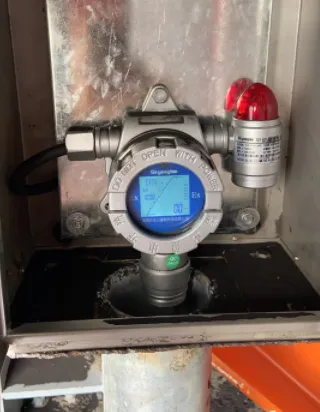
Strategic Placement: 28 fixed Combustible gas detector units were installed at critical points: pipeline flanges, valve manifolds, and trench access points, spaced every 50 meters to eliminate monitoring blind spots. This ensured even minor leaks in hard-to-reach areas were captured.
Data Transmission: Every CH4 detector transmitted real-time concentration data via a 4–20 mA analog signal to the facility’s central control room. This industrial-grade signal maintained stable, low-latency communication even in the facility’s high-vibration environment.
3. Implementation Outcomes & Client Feedback
Since the system went live, the facility has achieved transformative improvements in safety, compliance, and operational efficiency:
Proactive Leak Detection: During a routine maintenance cycle, a ch4 gas detector near a fermentation tank flange detected a CH₄ concentration spike to 12% LEL (0.6% VOL). The LEL gas detector triggered an immediate alert, allowing technicians to tighten the flange and resolve the leak within 15 minutes—well before it reached the explosive threshold.
Continuous Compliance: The 4–20 mA signal’s stable data transmission enabled the facility to generate automated, time-stamped reports of CH₄ levels, which were submitted to regulatory authorities to demonstrate adherence to safety standards. This eliminated costly compliance audits and potential fines.
Operational Stability: The Combustible gas detector network reduced unplanned shutdowns by 85% by identifying leaks early. The facility’s power generation output increased by 12% as a result of uninterrupted biogas supply.
Team Confidence: In a post-implementation interview, the facility’s operations manager noted: “Our fixed CH4 detector system has turned a reactive safety process into a proactive one. The lel gas sensor technology and 4–20 mA signal reliability mean we never miss a potential hazard—our team can focus on production, not constant leak checks.”
4. Case Conclusion
This case demonstrates the critical role of fixed Combustible gas detector systems in safeguarding biogas infrastructure. By combining LEL gas detector technology, strategic pipeline placement, and 4–20 mA data transmission, the client transformed a high-risk environment into a monitored, compliant operation.
For biogas facilities and other industries managing flammable gas pipelines, the key takeaway is clear: relying on portable CH4 detector devices is insufficient to mitigate explosion risks. A dedicated network of ch4 gas detector units, equipped with lel gas sensor technology, is essential to ensuring continuous safety, regulatory compliance, and operational resilience.
Real-World Application Case: Fixed Combustible Gas Detectors Safeguard Biogas Collection Pipeline Safety
Biogas production, a cornerstone of sustainable waste-to-energy systems, relies on capturing methane (CH₄) from organic matter to generate heat and electricity. However, CH₄ is highly flammable, with an explosive lower limit (LEL) of 5% by volume—meaning even a small leak in biogas collection pipelines can trigger catastrophic explosions, halt production, and endanger personnel. This case explores how a biogas facility deployed a network of fixed Combustible gas detector systems to monitor CH₄ levels in pipelines, mitigating explosion risks and ensuring uninterrupted operational safety.
1. Client Background & Core Safety Challenges
The client operates a medium-scale biogas processing facility that converts agricultural waste into biogas for on-site power generation. Its pipeline network spans 1.2 km, connecting fermentation tanks to gas purification units and power generators. Prior to upgrading its safety infrastructure, the facility faced critical risks:
Hidden Leak Hazards: Pipeline joints, valves, and flanges were prone to minor CH₄ leaks due to corrosion and vibration. These leaks often went undetected until manual inspections, allowing CH₄ to accumulate in enclosed utility trenches and reach explosive concentrations.
Reactive Monitoring Limitations: The team relied on portable CH4 detector devices for weekly spot checks, which failed to provide real-time data. By the time a leak was identified, it could have already reached the LEL threshold.
Regulatory Pressure: Local environmental and safety authorities mandated continuous monitoring of biogas pipelines to prevent explosions and reduce greenhouse gas emissions. The facility’s manual inspection process did not meet compliance standards.
Operational Disruption: A single undetected leak could trigger a shutdown of the entire biogas production chain, resulting in significant revenue loss and repair costs.
The client urgently needed a proactive LEL gas detector solution to enable 24/7 monitoring of CH₄ levels and automated hazard response.
2. Tailored Solution: Fixed Combustible Gas Detector Deployment
After a comprehensive pipeline audit, the client implemented a layered safety system centered on fixed ch4 gas detector units, optimized for biogas collection scenarios:
Core System Design
Sensor Technology: Each unit was equipped with a high-sensitivity lel gas sensor, functioning as both a LEL gas detector and CH4 gas detector.
Strategic Placement: 28 fixed Combustible gas detector units were installed at critical points: pipeline flanges, valve manifolds, and trench access points, spaced every 50 meters to eliminate monitoring blind spots. This ensured even minor leaks in hard-to-reach areas were captured.
Data Transmission: Every CH4 detector transmitted real-time concentration data via a 4–20 mA analog signal to the facility’s central control room. This industrial-grade signal maintained stable, low-latency communication even in the facility’s high-vibration environment.
3. Implementation Outcomes & Client Feedback
Since the system went live, the facility has achieved transformative improvements in safety, compliance, and operational efficiency:
Proactive Leak Detection: During a routine maintenance cycle, a ch4 gas detector near a fermentation tank flange detected a CH₄ concentration spike to 12% LEL (0.6% VOL). The LEL gas detector triggered an immediate alert, allowing technicians to tighten the flange and resolve the leak within 15 minutes—well before it reached the explosive threshold.
Continuous Compliance: The 4–20 mA signal’s stable data transmission enabled the facility to generate automated, time-stamped reports of CH₄ levels, which were submitted to regulatory authorities to demonstrate adherence to safety standards. This eliminated costly compliance audits and potential fines.
Operational Stability: The Combustible gas detector network reduced unplanned shutdowns by 85% by identifying leaks early. The facility’s power generation output increased by 12% as a result of uninterrupted biogas supply.
Team Confidence: In a post-implementation interview, the facility’s operations manager noted: “Our fixed CH4 detector system has turned a reactive safety process into a proactive one. The lel gas sensor technology and 4–20 mA signal reliability mean we never miss a potential hazard—our team can focus on production, not constant leak checks.”
4. Case Conclusion
This case demonstrates the critical role of fixed Combustible gas detector systems in safeguarding biogas infrastructure. By combining LEL gas detector technology, strategic pipeline placement, and 4–20 mA data transmission, the client transformed a high-risk environment into a monitored, compliant operation.
For biogas facilities and other industries managing flammable gas pipelines, the key takeaway is clear: relying on portable CH4 detector devices is insufficient to mitigate explosion risks. A dedicated network of ch4 gas detector units, equipped with lel gas sensor technology, is essential to ensuring continuous safety, regulatory compliance, and operational resilience.
no data
Contact Us





Fill out the form