

Robot-Integrated 4-in-1 Gas Detection System
Release time:2026-09-16
Source:来源
H2: Case Study: Unmanned Inspection Gas Sensor for Hazardous Zones
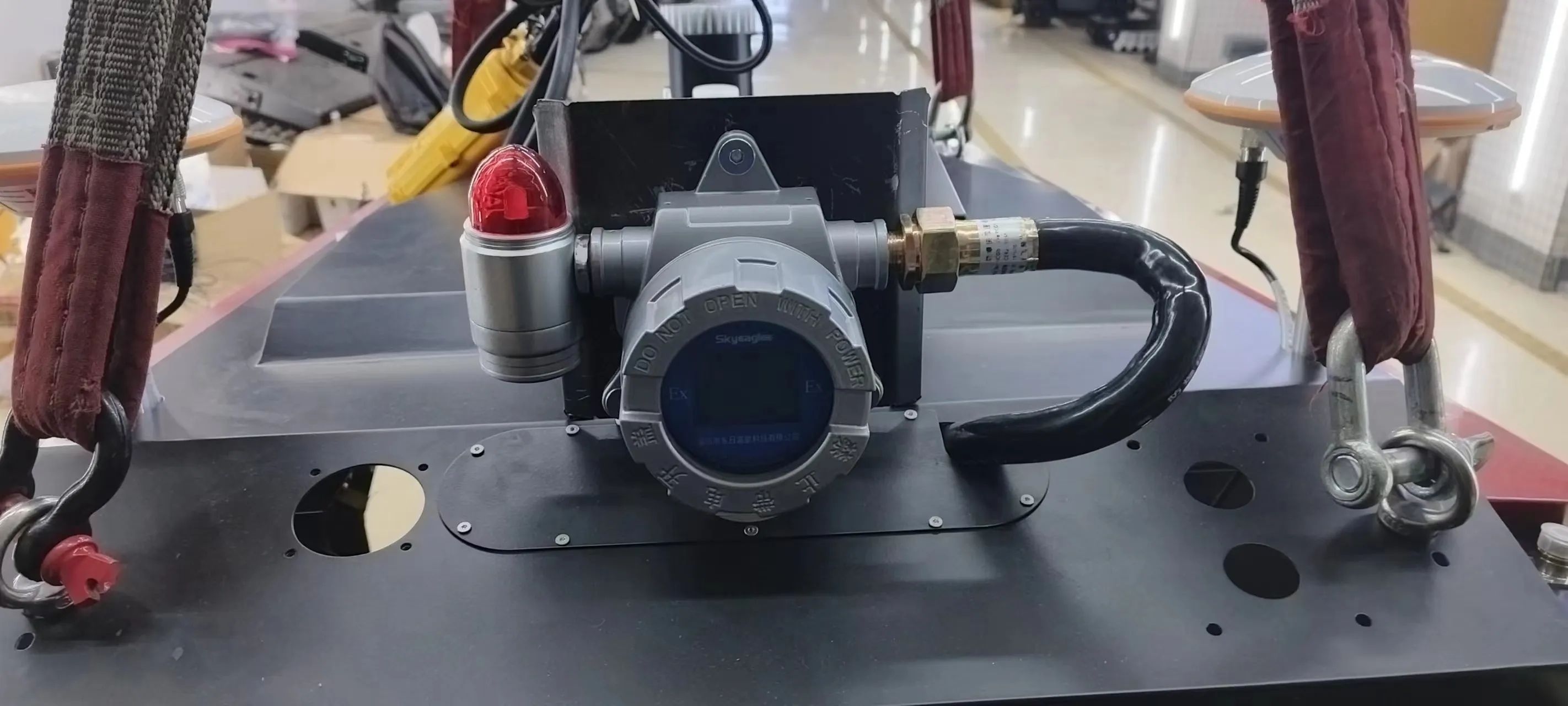
The Application Scenario: Integrating with Industrial Robots
As seen hoisted during its final assembly and calibration phase, this Robot-Integrated Gas Detector serves as the core safety payload for a specialized unmanned inspection platform. Mounted on a heavy-duty chassis equipped with GNSS satellite positioning antennas, this mobile unit is designed to replace human workers in high-risk environments. By integrating directly into an automated guided vehicle (AGV), the detector can travel deep into pipe galleries, tunnels, and chemical plants to execute continuous, remote atmospheric monitoring.
Why Detect LEL, SO2, CO, H2S, and Temperature/Humidity?
Deploying a Multi-Gas Payload for AGV into hazardous environments serves one primary objective: replacing human personnel in life-threatening conditions while gathering precise, real-time safety data. This 4-in-1 Gas Detection System specifically targets the most critical industrial threats:
1. Preventing Catastrophic Explosions (LEL)
Combustible gases pose the highest immediate risk in chemical and petrochemical facilities. By continuously monitoring the Lower Explosive Limit (LEL), the Unmanned Inspection Gas Sensor ensures that the AGV itself does not enter or ignite an explosive atmosphere, triggering instant remote alerts if vapor concentrations reach volatile levels.
2. Guarding Against Lethal Toxic Leaks (SO2, CO, H2S)
Sulfur Dioxide (SO2), Carbon Monoxide (CO), and Hydrogen Sulfide (H2S) are highly toxic and often deadly byproducts found in petroleum refining, mining, and metallurgy. Continuous mobile tracking of these specific gases prevents toxic accumulation and allows safety control centers to map out dangerous zones, ensuring human operators know exactly which areas are strictly off-limits for manual entry.
3. Mapping Environmental Extremes (Temperature & Humidity)
Beyond toxic threats, tracking extreme temperature and humidity changes helps control room operators assess the physical safety of the facility (e.g., detecting abnormal heat from failing equipment) and ensures the robotic equipment stays within its operational limits.
H2: Case Study: Unmanned Inspection Gas Sensor for Hazardous Zones
The Application Scenario: Integrating with Industrial Robots
As seen hoisted during its final assembly and calibration phase, this Robot-Integrated Gas Detector serves as the core safety payload for a specialized unmanned inspection platform. Mounted on a heavy-duty chassis equipped with GNSS satellite positioning antennas, this mobile unit is designed to replace human workers in high-risk environments. By integrating directly into an automated guided vehicle (AGV), the detector can travel deep into pipe galleries, tunnels, and chemical plants to execute continuous, remote atmospheric monitoring.
Why Detect LEL, SO2, CO, H2S, and Temperature/Humidity?
Deploying a Multi-Gas Payload for AGV into hazardous environments serves one primary objective: replacing human personnel in life-threatening conditions while gathering precise, real-time safety data. This 4-in-1 Gas Detection System specifically targets the most critical industrial threats:
1. Preventing Catastrophic Explosions (LEL)
Combustible gases pose the highest immediate risk in chemical and petrochemical facilities. By continuously monitoring the Lower Explosive Limit (LEL), the Unmanned Inspection Gas Sensor ensures that the AGV itself does not enter or ignite an explosive atmosphere, triggering instant remote alerts if vapor concentrations reach volatile levels.
2. Guarding Against Lethal Toxic Leaks (SO2, CO, H2S)
Sulfur Dioxide (SO2), Carbon Monoxide (CO), and Hydrogen Sulfide (H2S) are highly toxic and often deadly byproducts found in petroleum refining, mining, and metallurgy. Continuous mobile tracking of these specific gases prevents toxic accumulation and allows safety control centers to map out dangerous zones, ensuring human operators know exactly which areas are strictly off-limits for manual entry.
3. Mapping Environmental Extremes (Temperature & Humidity)
Beyond toxic threats, tracking extreme temperature and humidity changes helps control room operators assess the physical safety of the facility (e.g., detecting abnormal heat from failing equipment) and ensures the robotic equipment stays within its operational limits.
no data
Contact Us





Fill out the form