

Container Fire Gas Detection Solution
Release time:2026-03-12
Source:Skyeaglee
Container Fire Gas Detection Solution
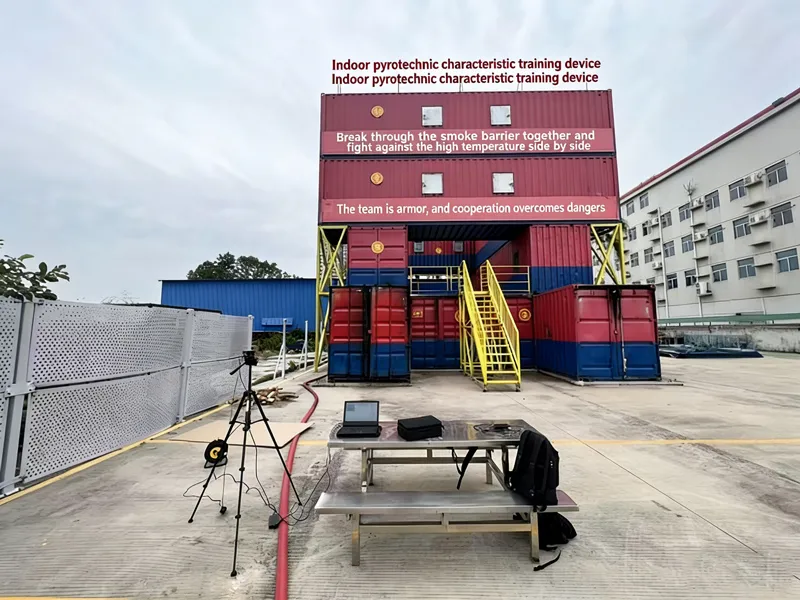
Burning wood inside a sealed shipping container produces large quantities of toxic and flammable gases, with carbon monoxide (CO) being the most dangerous and highly concentrated fatal gas.
The gases to be detected are carbon monoxide, flammable gases, and oxygen. For carbon monoxide to reach its lower explosive limit, a concentration of 12.5% is required. However, during the combustion process, other flammable gases are present, some of which pose an explosion risk at very low concentrations, such as hydrogen at 4% (LEL) and methane at 5% (LEL). The combustion process can also lead to dangerously low oxygen levels, which is why flammable gases also fall within the required detection range.
The concentration alarm limits for sampled gases can be adjusted according to on-site requirements.
Due to the high temperatures generated during the combustion process inside a shipping container, gas detection instruments cannot be installed directly inside for monitoring. The following solution is provided:
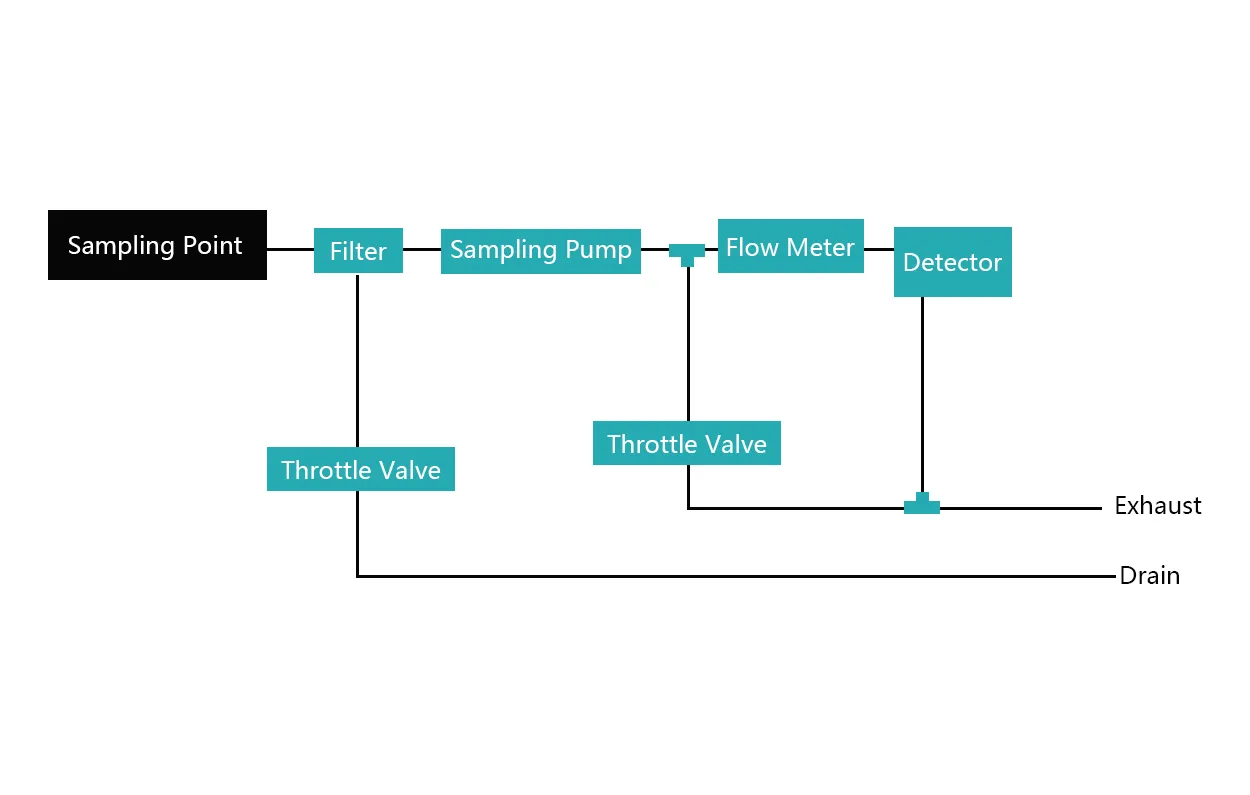
- First, install a stainless steel sampling probe (heat-resistant) by drilling a hole in the upper part of the container. Since the target gases are lighter than air, they tend to accumulate at the top, making a high sampling point optimal.

2. Connect the stainless steel sampling probe to the equipment enclosure via stainless steel tubing.
3. The sampled gas first passes through a filter inside the equipment to remove dust and impurities, preventing tube blockages and facilitating better maintenance of the core gas sensor components.
4. After dust filtration, as the high-temperature gas cools, it generates significant moisture. Therefore, an internal electronic condenser is used for dehumidification, paired with a peristaltic pump and a time relay to control the frequency of drainage.
5. A flow meter controls the flow rate of the drawn-in gas (generally set between 0.3–0.5 L/min). Finally, the gas reaches the instrument for detection (the instrument's operating environment should be within -20°C to 60°C).
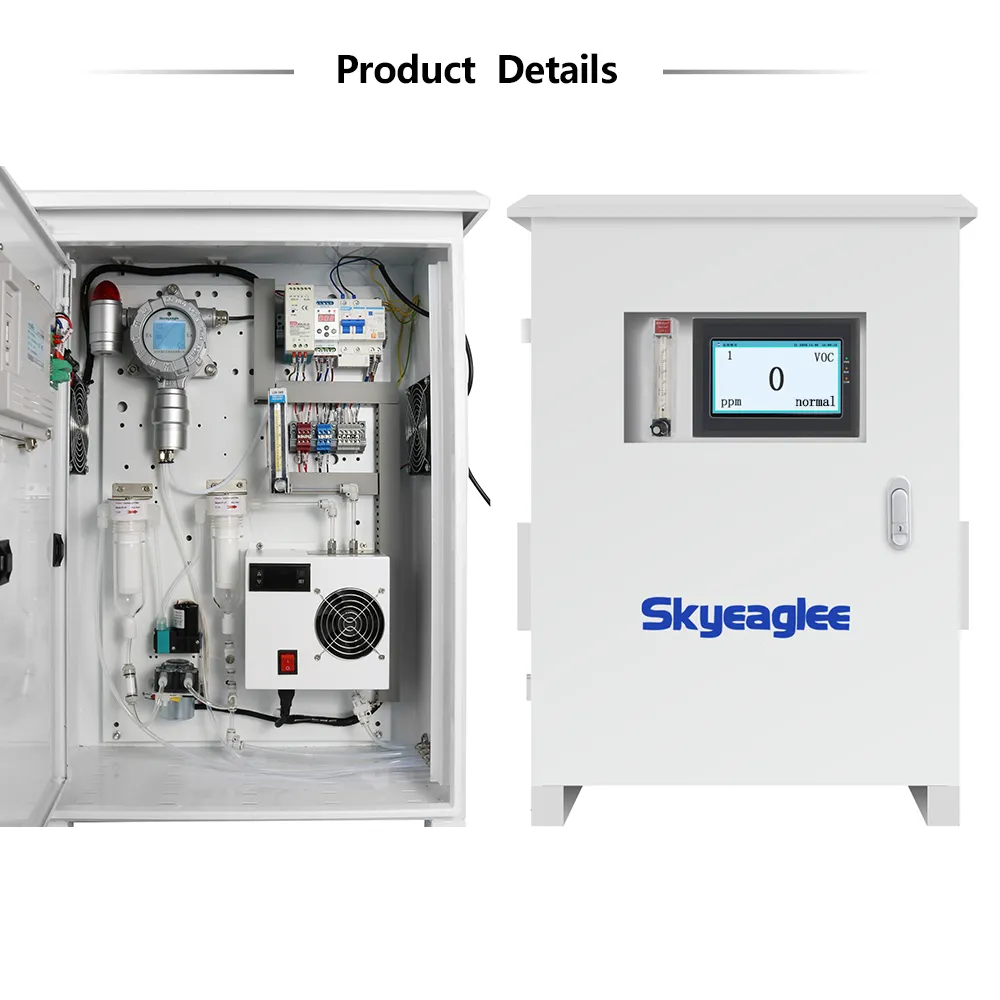
Display of the equipment's appearance and internal structure
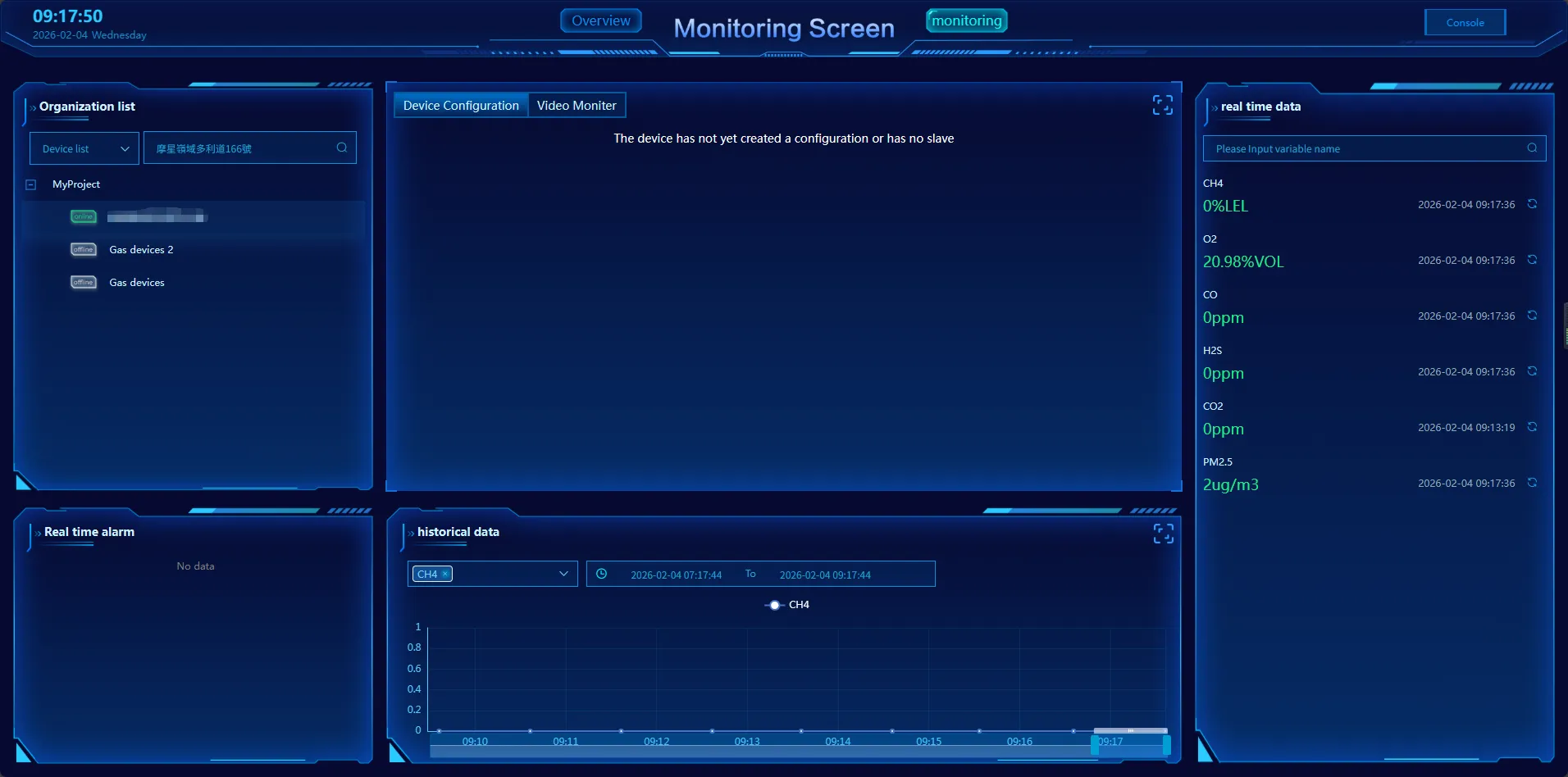
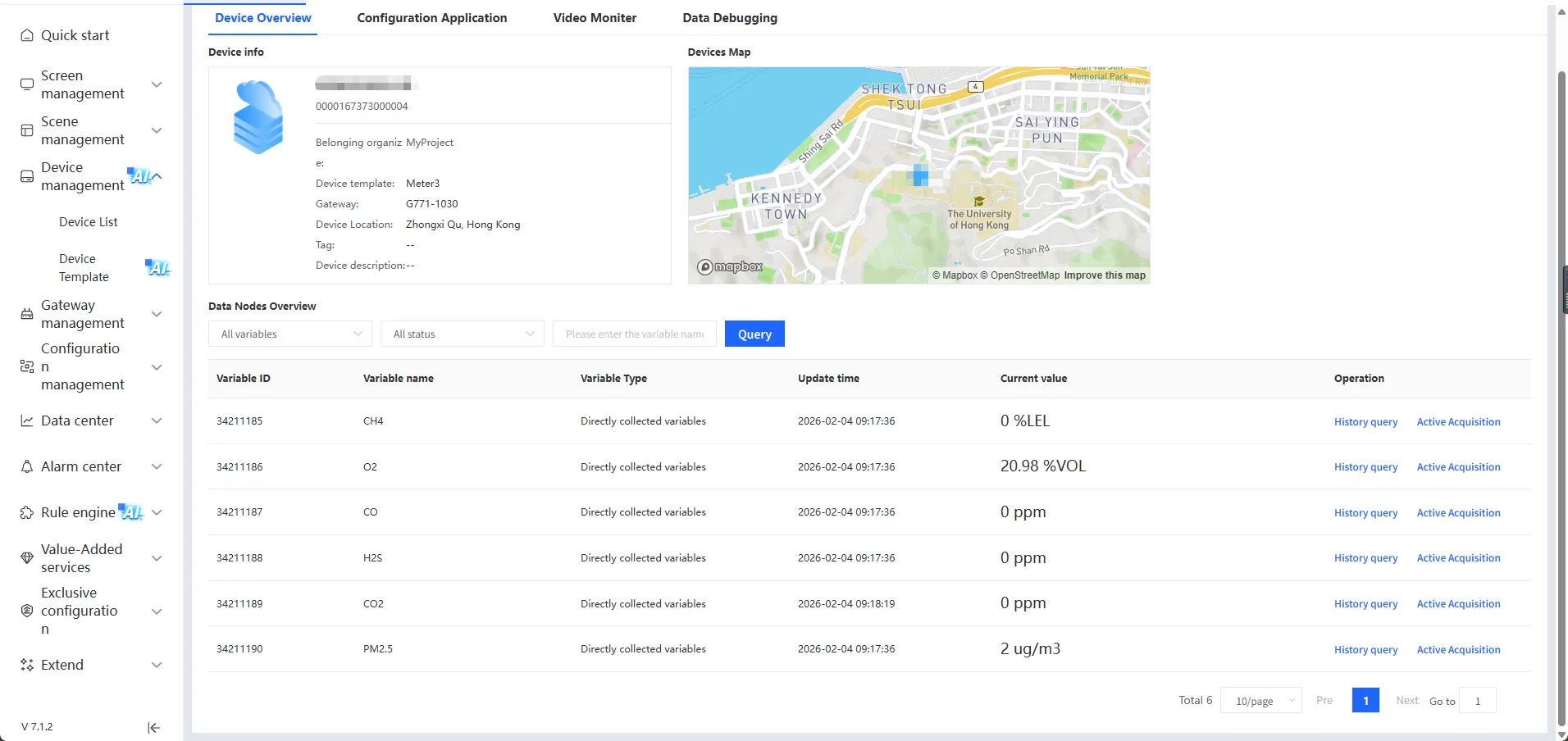
Read the real-time concentration of the gases and upload the data to a cloud platform. The frequency of data uploads (every X seconds or minutes) can be set, and a trend chart is generated for easy visualization.
A third-party platform is provided free of charge for seven years. As it contains a built-in IoT SIM card, once the card expires, it needs to be reactivated to resume service. The platform can be accessed via a mobile device by searching for the official account or via a computer by entering the website URL in a browser.
PC version page display
You can Log in https://account.usr.cn/#/cloud/setting/ViewAccountInfo website.
Container Fire Gas Detection Solution
Burning wood inside a sealed shipping container produces large quantities of toxic and flammable gases, with carbon monoxide (CO) being the most dangerous and highly concentrated fatal gas.
The gases to be detected are carbon monoxide, flammable gases, and oxygen. For carbon monoxide to reach its lower explosive limit, a concentration of 12.5% is required. However, during the combustion process, other flammable gases are present, some of which pose an explosion risk at very low concentrations, such as hydrogen at 4% (LEL) and methane at 5% (LEL). The combustion process can also lead to dangerously low oxygen levels, which is why flammable gases also fall within the required detection range.
The concentration alarm limits for sampled gases can be adjusted according to on-site requirements.
Due to the high temperatures generated during the combustion process inside a shipping container, gas detection instruments cannot be installed directly inside for monitoring. The following solution is provided:
- First, install a stainless steel sampling probe (heat-resistant) by drilling a hole in the upper part of the container. Since the target gases are lighter than air, they tend to accumulate at the top, making a high sampling point optimal.
2. Connect the stainless steel sampling probe to the equipment enclosure via stainless steel tubing.
3. The sampled gas first passes through a filter inside the equipment to remove dust and impurities, preventing tube blockages and facilitating better maintenance of the core gas sensor components.
4. After dust filtration, as the high-temperature gas cools, it generates significant moisture. Therefore, an internal electronic condenser is used for dehumidification, paired with a peristaltic pump and a time relay to control the frequency of drainage.
5. A flow meter controls the flow rate of the drawn-in gas (generally set between 0.3–0.5 L/min). Finally, the gas reaches the instrument for detection (the instrument's operating environment should be within -20°C to 60°C).
Display of the equipment's appearance and internal structure
Read the real-time concentration of the gases and upload the data to a cloud platform. The frequency of data uploads (every X seconds or minutes) can be set, and a trend chart is generated for easy visualization.
A third-party platform is provided free of charge for seven years. As it contains a built-in IoT SIM card, once the card expires, it needs to be reactivated to resume service. The platform can be accessed via a mobile device by searching for the official account or via a computer by entering the website URL in a browser.
PC version page display
You can Log in https://account.usr.cn/#/cloud/setting/ViewAccountInfo website.
no data
Previous: hydrogen chloride gas detector
Next: multi gas detector 4 gas
Contact Us





Fill out the form